
By Dr. Daniel Velasco, President and CEO, Ensemble Learning and Conor Williams, The Children’s Equity Project
Washington, DC, sits at the center of national policy. Houston serves one of the country’s most culturally and linguistically diverse populations. San Francisco is part of a globally connected region shaped by both innovation and deep inequality. Each brings a distinct educational landscape.
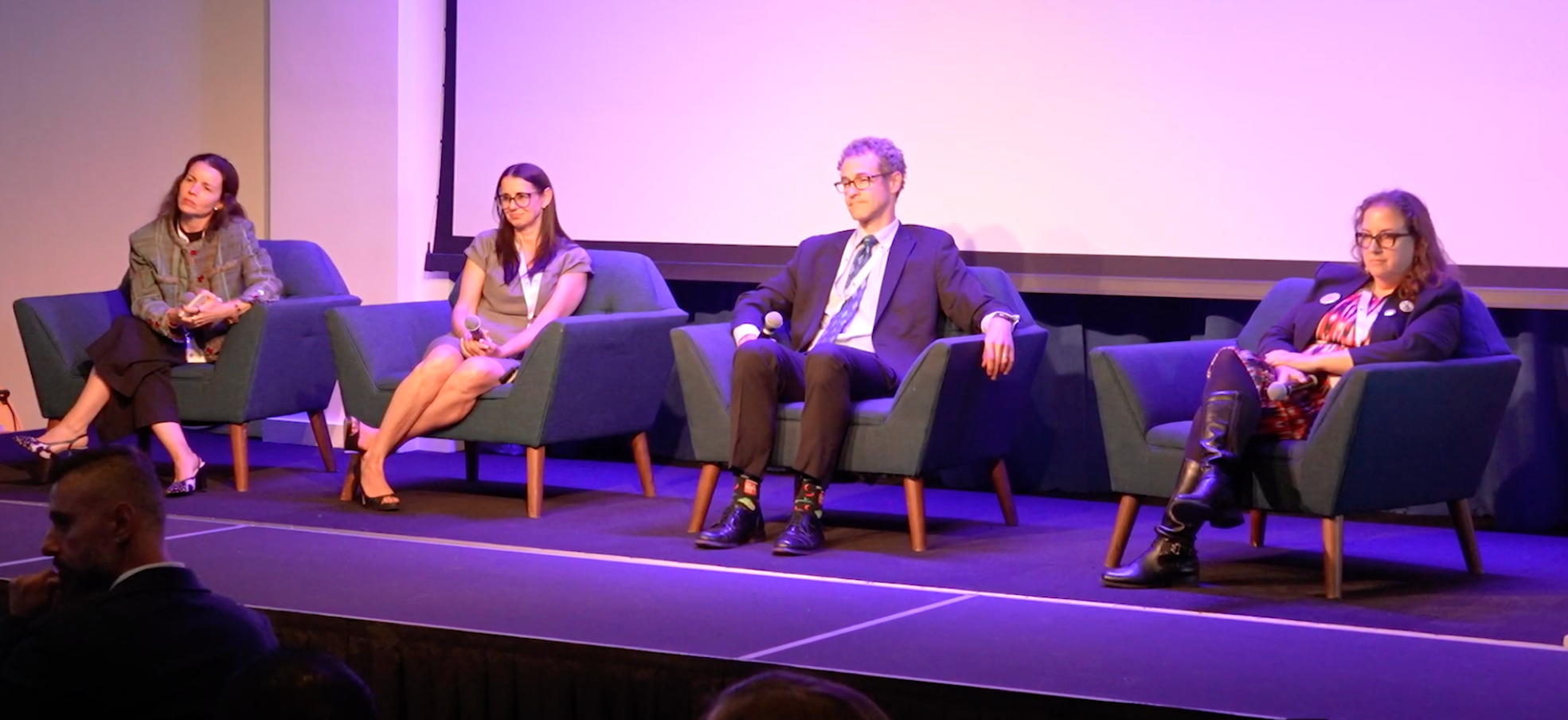
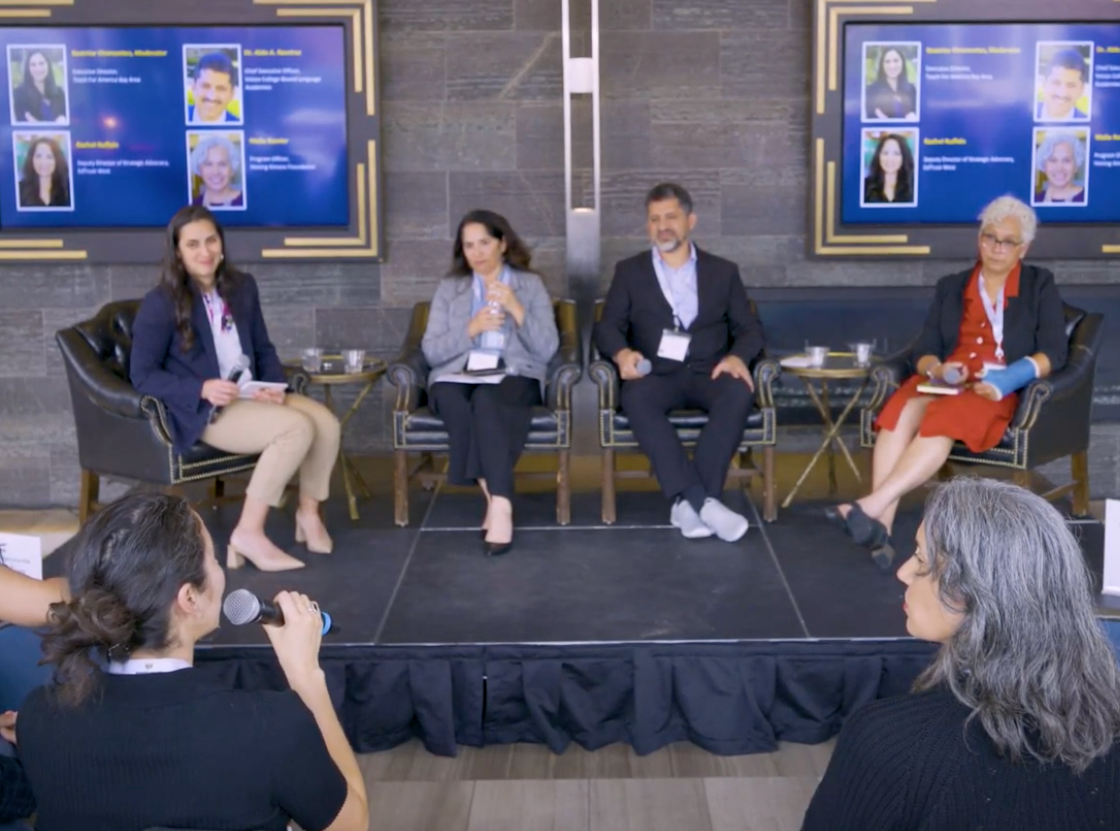
But when more than 100 educators, families, advocates, researchers, funders, and system leaders gathered for our spring 2026 State of Education for MLLs conversations, the differences between the three regions gave way.
Across the conversations, participants recognized students’ languages and cultural knowledge as strengths.Their questions were about how to build on them within their systems:
- Who gets a seat in dual language?
- Who teaches the class?
- What happens if federal money is delayed again?
Contents
- 1 Key Takeaways For 2026–27
- 2 Your Data Probably Undersells Your Multilingual Learners
- 3 The Dual Language Evidence Is Stronger Than The Debate Suggests
- 4 Three Regions, Three Different Starting Points
- 5 Access Is Part Of Implementation
- 6 The Bilingual Teacher Shortage Is A Pipeline Problem
- 7 What’s Happening With Multilingual Learner Funding
- 8 Five Actions For Your Fall Calendar
Key Takeaways For 2026–27
- To understand how students are doing, schools need to look beyond current English learners and include students who have reached proficiency and exited services.
- Lottery-based research found that students in dual language programs made stronger gains in English reading, with no significant differences in math or science.
- Building a strong bilingual workforce takes time. Districts need a two-year staffing pipeline, not another short-term hiring push.
- Temporary federal funding is available, but full-year FY2027 Title III funding is still uncertain.
Your Data Probably Undersells Your Multilingual Learners
In fall 2021, English learners made up 10.6% of U.S. public school students, about 5.3 million children, up from 9.4% a decade earlier.
A 2024 UChicago Consortium study followed Chicago Public Schools students into college. Students who had exited EL status by ninth grade had higher graduation rates and higher two-year college persistence rates among college enrollees than the district average.Their GPAs and SAT scores came in slightly above the district average too. Lead author Marisa de la Torre noted that reporting only on current ELs obscures these successes.
The study found the other half of the picture too. Long-term English learners had GPAs and SAT scores below the district average and lower persistence among students attending four-year colleges.
So run both numbers this year. Former EL outcomes show students’ longer-term progress, not proof that a program caused it. Current EL outcomes help identify where stronger support is needed.
The Dual Language Evidence Is Stronger Than The Debate Suggests
Dual language immersion (DLI) teaches academic content through two languages, developing bilingualism and biliteracy. A 2017 RAND study followed 1,625 Portland applicants whose program admission was determined by lottery.
Students who won a seat outperformed their peers on state reading tests by 13% of a standard deviation in grade 5 and 22% in grade 8, roughly seven and nine additional months of learning. English learners assigned to immersion were 3 percentage points more likely to reach English proficiency by grade 6, rising to 14 percentage points when their home language matched the classroom partner language.
Researchers found no statistically significant differences in math or science outcomes.
RAND cautioned that rapid expansion could dilute quality. Its researchers also emphasized equitable access: two-way programs depend on enrolling students from both language backgrounds.
Three Regions, Three Different Starting Points
| Region | The core question | What other systems can learn |
| Washington, DC region | Who gets access as demand grows? | Set EL enrollment priority, transportation, and family communication policies before a program opens. |
| Houston | What does quality look like at scale? | State policy can support expansion. Texas’s 2019 HB 3 established a 0.15 bilingual funding weight for EL students in one-way or two-way DLI. In fall 2021, Texas had the nation’s highest EL share, at 20.2%. |
| Bay Area | How do you rebuild capacity and hold it? | Rebuilding bilingual staffing takes time. California issued more than 1,200 bilingual authorizations annually from 2003–04 through 2009–10, but fewer than 700 in 2015–16. |
California’s Proposition 227 sharply restricted bilingual instruction beginning in 1998, with exceptions and waivers. Voters approved Proposition 58 in 2016 to ease those restrictions. Bay Area educators described the continuing work of rebuilding bilingual programs.
Access Is Part Of Implementation
In Washington, DC, participants described a pattern worth watching in your own district. As dual language becomes desirable to well-resourced, English-dominant families, English learners get squeezed out of the programs built for them.
Before opening a program, decide who will receive priority and document the decision. Access also depends on whether families can enroll in their own language, whether transportation is available, and whether the program continues into later grades. Our dual language transition work starts there.
At our DC gathering, Anne Arundel County leaders described a planning year before launch, giving teachers and principals time to prepare instruction and community supports. That preparation includes choosing materials that reflect students’ languages and cultures.
A teacher can leave a workshop ready to try a new approach, then need help adapting it once the lesson begins. Professional learning that ends at the workshop misses that part. Our instructional coaching continues into classrooms through modeling and observation, so teachers have support as they work with their own students.
At Manor ISD, a pre-K teacher described how much she used to translate for students. When she began trying other strategies, the room changed. Students spoke up more. Their conversations got richer. By the next year, she was training other teachers. The Manor ISD case study found that reading growth among participating emergent bilingual cohorts was 20% to 75% above a year’s expected growth. The study was correlational, so those gains can’t be pinned on coaching alone.
The Bilingual Teacher Shortage Is A Pipeline Problem
Staffing came up in all three cities, on panels and on feedback forms. Leaders knew which positions they needed, but filling them was the hard part.
Even with years of classroom experience, a bilingual paraprofessional may need to complete an unpaid student-teaching placement. If that means giving up the paycheck their family relies on, becoming a teacher may be out of reach. Tuition and English-only licensure exams can add to the difficulty.
States have two levers. One makes traditional preparation affordable through scholarships, student-teaching stipends, tutoring, and exam support. The other expands approved, paid pathways into teaching, including residency and apprenticeship models, and reviews licensure requirements for unnecessary barriers.
Districts don’t have to wait for either to begin planning. Start with the people already in your buildings, outline what each one needs to finish a credential, and bring a specific proposal to your state agency or preparation partner this fall.
Then plan to support them. Make time for bilingual teachers to collaborate, and prepare principals to support their instruction through leadership coaching.
What’s Happening With Multilingual Learner Funding
Here’s where things stand as of September 2026.
Congress provided $890 million for Title III English Language Acquisition in the Consolidated Appropriations Act, 2026, signed February 3.
The FY2027 presidential budget request and the House Appropriations Committee’s June bill both proposed eliminating it. That cut has not become law. A temporary funding law signed September 2 continues funding at FY2026 rates through December 11, unless new appropriations replace it sooner. Full-year FY2027 funding remains unresolved.
By the time the funding was held up in summer 2025, districts had already hired staff and built budgets around it. The U.S. Department of Education withheld nearly $6.8 billion in school funding, including Title III, leaving leaders scrambling to figure out what they could keep running if the money never showed up. It eventually did, weeks later. But schools had already spent time and energy planning around a hole they hadn’t expected.
The Department also rescinded civil rights guidance and closed the Office of English Language Acquisition after staffing cuts. Students’ rights and districts’ responsibilities remain. Schools must still address language barriers for English learners. Our convening participants described immigration-enforcement fears affecting attendance and enrollment, including among U.S.-born children with immigrant family members.
Washington-area educators described taking registration into neighborhoods and offering virtual ways for families to participate. Their responses began with noticing a change and asking families what they needed.
Five Actions For Your Fall Calendar
- Review your data with families and educators. Bring teachers, families, administrators, and board members up to speed on your EL and dual language numbers, including outcomes for students who already exited. Set priorities before staffing and budget decisions close.
- Audit who can actually reach your dual language program. Look at who applies, who enrolls, and who stays. Include transportation, enrollment communication, and grade-level continuity. Assign an owner and a date to every change.
- Map bilingual staffing across two years. Identify the languages and grade levels you’ll need, name the candidates already in your buildings, and take a written proposal to leadership this fall.
- Write a one-semester funding contingency plan. Work with finance on which staff and services depend on which funding stream, and what allowable state and local resources could cover a delay.
- Keep learning with people doing the work. Visit classrooms, review student work together, and trade practices with leaders serving similar communities. Explore our Learning Center resources, including guides to the silent period and early production.
Bilingual programs rarely fall short because districts lack a plan. The harder part is staffing that plan and turning professional learning into lasting classroom practice.
Teachers need an affordable path into the profession, time to plan with colleagues, and support once implementation begins. Ensemble Learning helps districts stay with the work after the plan is written and the workshop ends. Talk with us about supporting your teachers this year.