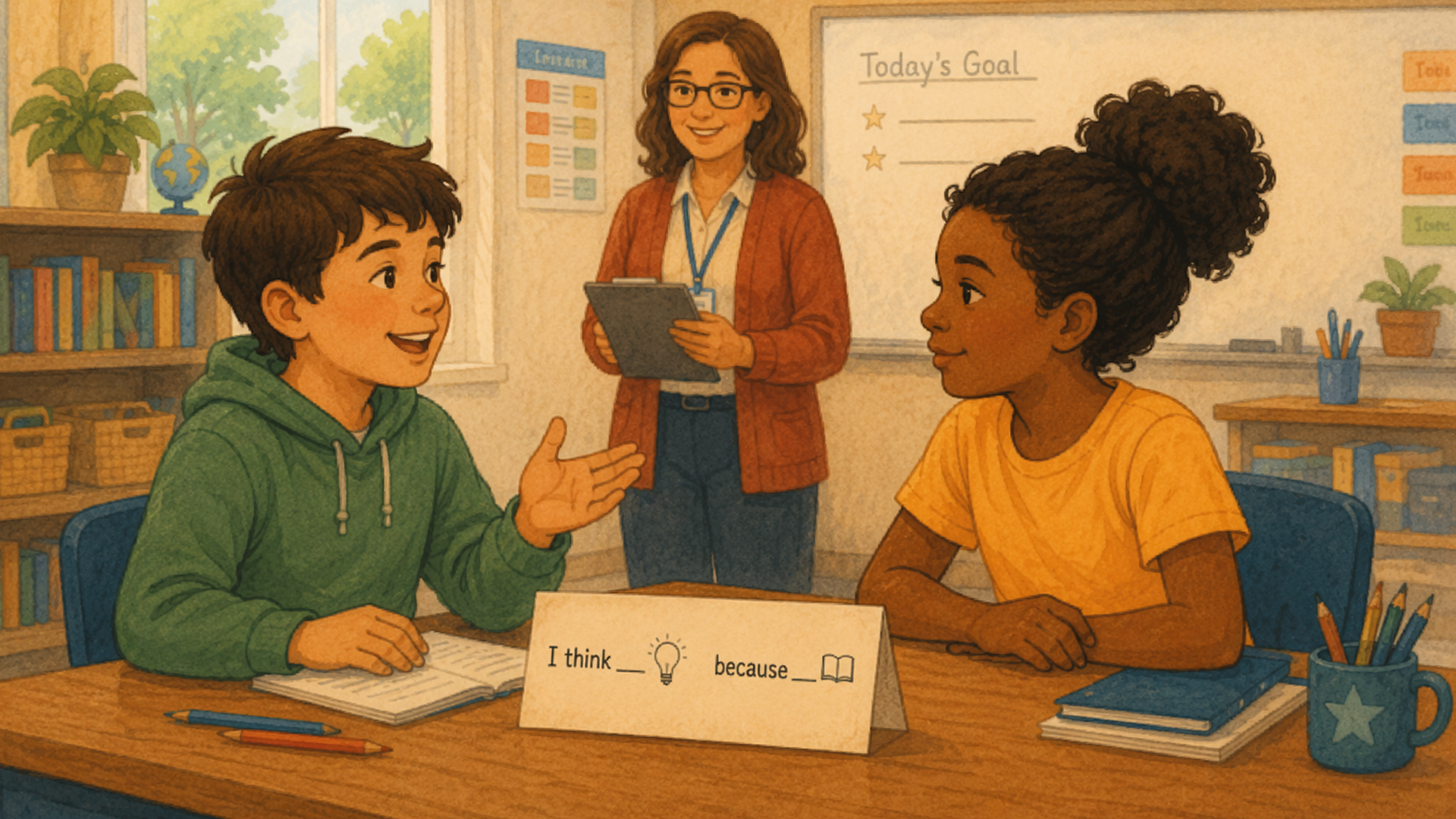
A new student walks into a classroom on a Tuesday in October. She doesn’t say a word to anyone for weeks. In one school, people read that silence correctly as the expected, healthy work of a brain absorbing a new language. In another school, the silence gets flagged as a behavior concern, or worse, a possible referral.
That gap isn’t a teacher problem. It’s a systems problem, and you can help close it.
The Pre-production stage, often called the Silent Period, is the first of the six stages of second-language acquisition, and it’s the one leaders feel most urgent about. It’s also the one most likely to reveal whether a building has consistent, schoolwide structures for newcomers or whether support varies from classroom to classroom.
This post is about supporting newcomers in the Silent Period at the system level and what a coordinator, supervisor, or principal needs to put in place so that every newcomer gets a consistent, well-supported entry into your school, regardless of which classroom they land in.
Contents
Defining the Silent Period
In the Pre-production stage, students absorb language — vocabulary, sound patterns, classroom routines — mostly by listening, and they may go weeks or months before they start speaking themselves. Teachers support this stage with Total Physical Response (TPR), which pairs new words with physical actions or gestures, so meaning lands without requiring the student to speak, along with visual aids and a lot of patience while comprehension builds. If you want the fuller picture of what’s happening cognitively and how classroom teachers should respond day to day, see the full breakdown in our pillar guide on the six stages of second language acquisition.
The pillar covers the classroom basics. This post goes further: what a leader needs to build so Pre-production goes well, building-wide.
What the Silent Period Asks of a School’s System
The Silent Period doesn’t just ask teachers to adjust their instruction. It asks the entire school to respond in coordinated ways. Because newcomers often arrive with little notice, the systems that support them need to be in place before they’re needed.
Here are a few areas where strong schoolwide processes can make a meaningful difference:
A consistent intake process. Newcomers often enroll on a fast timeline, leaving little opportunity to prepare after they’ve arrived. A clear intake process helps schools gather essential information, welcome families, and ensure classroom teachers have the context and resources they need from day one. Without that shared process, the experience can vary depending on when a student enrolls or who happens to receive them.
A shared understanding of the Silent Period. Students in the Pre-production stage may communicate very little, avoid eye contact, or appear hesitant to participate. Without a common understanding of what this stage looks like, those behaviors can be misunderstood. Building a shared language around second-language acquisition helps staff distinguish typical language development from concerns that may require additional support.
Consistent expectations across classrooms. Teachers naturally bring different strengths and instructional styles to their classrooms. Schoolwide guidance around supporting newcomers helps ensure students experience consistency, even as they move between classes or work with multiple educators. Shared practices—such as using visuals, providing opportunities for nonverbal participation, and setting developmentally appropriate expectations—create a more stable learning environment.
Structures that prevent isolation. When newcomers are spread across a building, it’s important to ensure they aren’t navigating the experience alone. Thoughtful staffing, peer supports, collaboration among educators, and access to language development expertise can help both students and teachers feel supported, regardless of where a newcomer is placed.
Supporting students during the Silent Period isn’t about asking individual teachers to do more. It’s about putting systems in place that make effective support possible across the entire school.
What Leaders Should Put in Place
1. A Consistent Newcomer Intake & First-Weeks Process
Every newcomer should enter your building through the same door, structurally speaking, even if their classroom placement differs. That means a defined process for the first days and weeks:
- who conducts the intake conversation
- what background information gets collected and passed to the teacher (language history, prior schooling, family context)
- how the receiving teacher is briefed before the student arrives
- who checks in with that teacher during weeks one, two, and four.
The goal is to create a consistent experience for every newcomer, giving teachers the information and support they need from day one while helping students and families feel welcomed, prepared, and connected.
2. Shared Expectations So Every Classroom Handles Pre-production the Same Way
Staff-wide, not classroom-by-classroom: what does supporting the Pre-production stage mean at your school? What’s the baseline expectation for visuals, TPR, peer pairing, and patience with silence? A shared floor gives every newcomer the same strong start, no matter the classroom they’re placed in.
A short staff-facing reference, built once and reused every time a newcomer arrives, gives every teacher, including those who’ve never had a newcomer before, a common starting point.
3. Instructional Coaching That Targets the Silence-as-Disengagement Confusion
This is the coaching conversation that matters most in Pre-production, and it’s rarely explicit in most coaching models. When you’re in a classroom with a newcomer, what should you actually be looking for?
Look for engagement signals that don’t require speech. Is the student tracking the lesson visually, attempting the TPR gestures, staying near peers during group work, or responding to non-verbal cues? A teacher who’s anxious about a silent student often either over-prompts (repeatedly asking the student to speak, which can shut a newcomer down further) or disengages entirely, assuming there’s nothing to work with yet. Both are coachable, and both require you or your instructional coaches to know what “good” looks like at this stage well enough to name it in a walkthrough and in the debrief that follows.
If your coaching staff isn’t confident distinguishing productive silence from actual disengagement, that’s a gap worth closing before your next newcomer arrives.
4. A Funding Strategy That Makes This Sustainable
None of the above survives on goodwill alone. Title III funds and other newcomer-specific allocations exist for staffing (bilingual aides, EL-certified support), materials (visual supports, TPR resources), and professional development for classroom teachers who are supporting a newcomer for the first time. The leaders who do this well are deliberate about mapping funding to the specific gaps above, rather than spending reactively.
This is also where outside support tends to help most, not because building leaders lack the will, but because strategic planning around funding streams is its own skill, distinct from the daily work of running a school.
What Good Looks Like
Picture a middle school where a newcomer arrives on a Wednesday. The front office has a folder ready with prior schooling notes, home language, and a brief family conversation captured the day before. The receiving teacher was briefed that morning, and a peer buddy, identified in advance, sits with the student by first period. The teacher has a visual schedule ready and doesn’t ask the student to speak in front of the class. Two weeks in, an instructional coach observes and later tells the teacher, specifically, what they saw that counted as engagement, not just “good job,” but here’s what to watch for next.
That’s a building where the leader decided ahead of time that a newcomer’s first month wouldn’t be left to chance.
Building This at Your School
Expertise shouldn’t live only inside individual teachers’ heads. It should be reflected in documented, repeatable structures that help every newcomer receive consistent support, regardless of which classroom they enter. Building those systems is the kind of work that often benefits from a partner who’s helped schools do it before.
If you’d like to talk through what this looks like for your staff and building, our Leadership Coaching and Professional Development work is built around exactly this kind of system-building, with ongoing support while you put it in place.
This is the first post in a series on leading each stage of second language acquisition. Next up: Stage 2, Early Production. What changes once newcomers start producing single words and short phrases, and what your staff needs to do differently.