A school that prioritizes students’ worldviews, perspectives, and needs, is often a school that serves a safe space for learning and development.
Student centered education makes this possible thanks to its focus on real student curiosity, agency, and collaboration.
It is more than a method or an abstract philosophy.
When implemented right, student centered learning represents a significant rethinking of how schools operate—from the role of the teacher to the way classrooms are structured, and even how success is defined.
In an age when engagement and equity are more essential than ever, this shift offers a path forward.
What follows is a breakdown of five key shifts that are transforming schools embracing student centered education, and how educators and leaders can start moving in that direction.
Contents
What Is Student Centered Education?
Student centered education is an approach that prioritizes students’ interests, needs, and agency in every aspect of the learning process.
Rather than organizing instruction solely around standards, curriculum maps, or pacing guides, it asks: What do students need to grow as thinkers, creators, and contributors?
This model empowers learners to take an active role in their education.
It emphasizes collaboration, voice, choice, reflection, and relevance.
Teachers design learning experiences that begin with students’ identities and end with outcomes that matter in the real world.
From classroom environments to assessment practices, student centered education requires a shift in mindset, structure, and how learning is approached.
Student Centered Education for ELLs
This approach can create life-altering experiences for any kind of student, but becomes particularly important when we’re talking about multilingual learners (MLLs) and/or English language learners (ELLs), because they:
- Often don’t fit the standard academic curriculum
- Need added support to meet language and literacy goals
- Bring cultural nuances
- Have particular concerns
- And additional factors
5 Key Shifts Student Centered Education Makes Possible in School Design
1. Teachers Go from Lecturers to Learning Coaches
For decades, the teacher’s role centered on knowledge delivery.
This made sense in an era when access to information was limited and when strong hierarchies shaped the way everywhere.
The teacher was the expert, and students were expected to absorb and repeat.
In student centered environments, that model evolves.
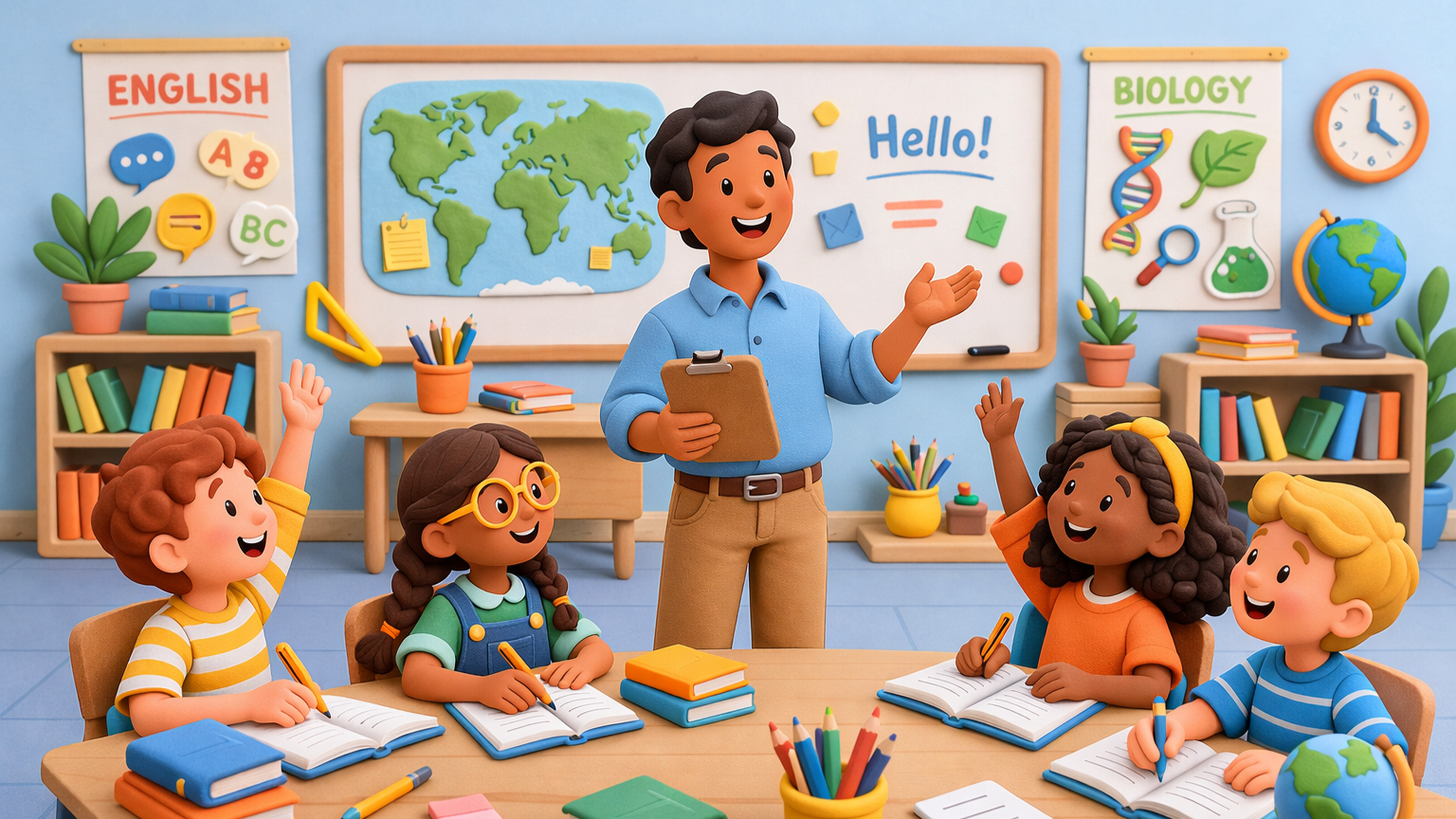
Teachers become learning coaches: facilitators who ask better questions, encourage independent thinking, and help students reflect on their learning.
You’ll see conferencing routines, student led discussions, and flexible grouping. When teachers are able to build robust learning partnerships, delivering content stops being a priority, but classrooms become much richer and safer spaces for everyone.
Who this affects most: Middle and high school students benefit deeply from this shift, as they are developing critical thinking, independence, and self-management skills needed for future learning.
2. Classrooms Go from Rigid to Interactive
In traditional classrooms, rows of desks, front-facing instruction, and silent note-taking reflected a model built around control and efficiency.
It supported teacher-centered delivery and made management predictable.
While it might still work for specific topics and workflows, today’s student centered classrooms look and feel different.
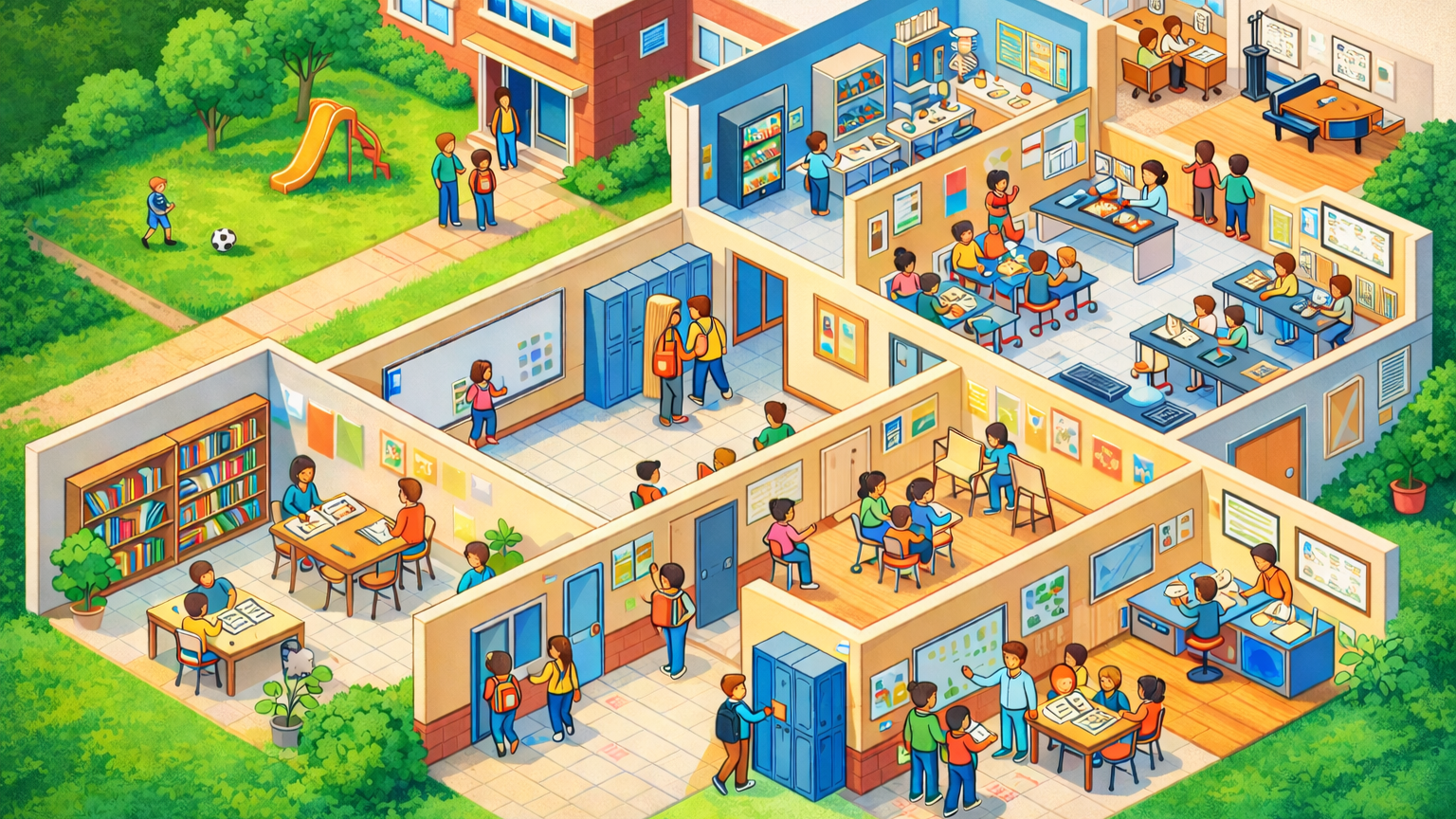
Learning environments are redesigned for collaboration and ownership.
Desks may be grouped or flexible. Anchor charts and learning goals are co-created. Student work is visible and evolving.
These changes enable engagement, particularly for multilingual learners and students who benefit from movement, discussion, and multimodal expression. A flexible layout can also pave the way for language acquisition strategies like Total Physical Response (TPR).
Who this affects most: Elementary and middle school students often benefit most from classroom design changes, as these age groups thrive in active, social learning environments.
3. Teaching Philosophies Go from Standardized to Resonating
Historically, instructional design prioritized standards, pacing guides, and assessment deadlines. The curriculum was fixed, and students adapted to it.
It allowed for establishing clear learning milestones and creating a strong structure for teachers and school leaders.
And while all these principles have a psychopedagogical foundation, they might also overlook some experiences and create a mold that not every student can fit.
This is why, today, many educators are flipping that sequence.
A student centered philosophy asks educators to start with students—their identities, their cultures, their interests. It’s a shift toward designing learning with students rather than for them.
These curricula and education plans integrate academic goals, but also seek to achieve them through content that really resonates.
However, we must keep in mind that critics of this approach warn that it may lead to loss of rigor, a narrowing focus on particular interests at the expense of essential skills, and logistical challenges for teachers who must differentiate at scale.
Even with the best of intentions in mind, it’s important to keep these possibilities in mind and seek balance between innovation and the core goal of education.
Whether it’s through choice boards, project-based learning, or student led conferences, students take ownership of both what they learn and how they show it.
Who this affects most: All levels benefit from this shift, but high school educators can feel the greatest impact on student engagement and motivation when instruction reflects their lived experiences and goals.
4. School Systems Go from Strict to Supportive
The traditional school schedule, with rigid periods and fixed silos between subjects, was designed to maximize efficiency.
However, these systems often create barriers to the kind of extended inquiry and collaboration that student centered learning demands.
In student centered schools, system-level supports can look different: block scheduling, integrated planning time, advisory systems, and performance-based assessments.
If your school is exploring these changes, it’s important to discuss beforehand how to maintain consistency throughout the institution
Discussing ways to maintain schoolwide consistency, so that student centered practices are not isolated to early adopters or certain classrooms, would add value. As in, how can leadership ensure system alignment and provide professional development for all staff?
These structures are designed to prioritize depth over pace, relationships over compliance, and relevance over standardization.
Without these changes, student centered practices remain isolated. With them, schools create consistency and coherence.
Who this affects most: System alignment benefits everyone, but it is especially critical at the middle and high school levels, where coordination across subjects and grade levels becomes more complex. This new organization system often allows students to feel more freedom and support.
5. Assessment Goes from Narrow to Comprehensive
For much of the past century, student success was measured by standardized tests.
This made sense when the goal was to benchmark performance and sort students by achievement.
Objective assessment will always be necessary. But it isn’t enough anymore.
This is because student centered education pushes for a broader definition of success.
It values student growth, engagement, and the ability to apply knowledge in real-world contexts. Schools now implement portfolios, public exhibitions, self-assessments, and performance tasks—not as extras, but as core evidence of learning.
This is particularly relevant for ELLs, as sometimes they may understand the topics and content, but fail to communicate them effectively due to language barriers. Taking this into account makes the difference between an unmotivated student and a seen one.
Who this affects most: These shifts benefit all students but are particularly transformative in high schools, where assessment influences graduation, college access, and identity development. They are also extremely relevant at any level when talking about English language learners.
The Challenges of Implementing Student Centered Education
Making this shift is rewarding, but it’s also complex.
Student centered education challenges long-held assumptions about teaching and learning.
It requires:
- Empowering and retraining your teaching staff
- Redesigning schedules
- Rethinking assessments
- Creating and gathering resources
- Building cultures of trust and experimentation
- And more
But Where To Start?
A viable implementation plan can look something like this:
-
- Building a shared vision with a concise team of teachers and leaders that explores student centered education and helps you co-create a vision that adapts to your specific institutional requirements.
- Piloting specific practices in one classroom or grade, like student led conferences, project-based learning, and similar. Make sure to observe closely and collect feedback from both students and staff.
- Reflecting and adjusting after staff meetings. Consider where and how students engaged the most, what barriers emerged, and what challenges could appear when expanding.
- Scaling the change across grade levels or departments. Make sure the transition is gradual, but that everyone feels somewhat involved.
Change doesn’t happen overnight. Early implementation may feel messy. Results may be uneven.
But over time, schools that invest in student centered systems report stronger engagement, deeper learning, and more equitable outcomes.
Considering and Ensuring Schoolwide Consistency
While early implementation will be concise, it’s important to have a strategy in mind so the benefits don’t end up limited to certain classrooms or early adopters.
Leadership must ensure that every layer of the school ecosystem is aligned around a shared philosophy.
- Start with a clear, compelling vision: Leaders need to articulate what student centered education looks like in their school or district as a living framework that guides everything from instruction to discipline policies. A shared language will help staff see how their roles connect to a broader purpose.
- Provide professional learning that’s ongoing and collaborative: One-time workshops won’t cut it. Teachers and staff need space to learn, reflect, and adapt their practice over time. This should include job-embedded coaching, teacher-led inquiry cycles, and collaborative planning time focused specifically on student centered strategies.
- Align policies and structures to reflect your new approach: If classroom practices prioritize voice and choice, but the master schedule, grading system, or discipline policies don’t support autonomy and relationships, there will be friction.
- Model the shift: Just as teachers are expected to create inclusive, responsive classrooms, school leaders should reflect those same values in their leadership style.
- Make alignment everyone’s job: True alignment happens when instructional coaches, support staff, counselors, and administrators all work toward the same vision. Cross-role collaboration and shared accountability help ensure student centered education becomes the norm.
These starting points are deep and will take time, but they also ensure consistency and provide a clear framework for true improvement.
Redesigning Schools With Students at the Center
Student centered education is a commitment to rethinking school from the student perspective.
It asks us to elevate voice, redesign systems, and redefine success.
The journey can be challenging, but the outcome is a learning community where every student feels seen, supported, and empowered.
Start small. Pilot a new practice. Build a team. Reflect openly.
At Ensemble Learning, we focus on understanding your school, your district, and your community, so the solutions are tailored to your needs and the shift to a student centered system is easier.
Together, we can make a fairer present for our multilingual youth.
Every step forward is a step toward a more equitable and engaging school experience.