As educators, there are many different ways to support English Language Learners (ELLs, or ELs) to help them succeed.
This is possible through multiple ELL resources for students.
An essential part of guiding multilingual students to go the extra mile and improve their proficiency is by providing them with useful resources to work on their English skills. These tools often go beyond language benefits, and end up impacting students’ abilities to connect, express themselves, and engage with rigorous academic content.
Educators across the country are looking for resources that are not only linguistically appropriate, but culturally affirming, adaptable, and proven to work in real classrooms.
At Ensemble Learning, we’ve reviewed the most-used platforms and promising tools for multilingual learners in 2026.
This guide features top-rated digital resources across categories like reading, writing, early learning, and comprehensive programs, each one designed to support language growth, content access, and equity.
Contents
The Best 12 ELL Resources for Students
Leveled Reading & Literacy Platforms
Leveled reading and literacy platforms help multilingual learners access grade-level content while meeting them at their current language proficiency.
These tools offer differentiated texts, built-in scaffolds, and comprehension supports that allow students to build vocabulary, fluency, and background knowledge without being excluded from rigorous instruction.
Newsela (Freemium)
Newsela curates current-event and standards-aligned nonfiction texts at five reading levels.
Each article comes with comprehension quizzes, discussion prompts, and optional Spanish versions. The platform also integrates with learning management systems, allowing teachers to pick readings for specific subjects, track reading progress, and differentiate effectively.
Lately, they added an AI writing assistant to provide instant feedback and improve written language skills.
This is a great platform for schools and institutions, as it works as added resource support for English learners.
Why it’s great for ELLs: It has a Read Aloud mode, quizzes, and Spanish translation allow equitable access to grade-level topics.
Best for: Grades 3 through 12, science, social studies, or ELA (English Language Arts) classrooms.
CommonLit (Free)
CommonLit offers high-quality texts for grades 3–12, including literature, informational texts, and primary sources.
You can search texts by grade, Lexile level, genre, and theme. Each passage includes guiding questions, a built-in dictionary, and translation in over 30 languages. The platform also features progress monitoring tools, formative assessments, and custom reading assignments tailored to student needs.
While there are paid plans for school-wide use, individual teachers can access the platform and catalogue for free.
Why it’s great for ELLs: Click-to-translate and embedded scaffolds make content highly accessible. Besides, teachers can customize supports by student.
Best for: Middle and high school reading, intervention groups, or teachers looking to improve reading skills.
ReadWorks (Free)
ReadWorks provides leveled K-12 reading passages with vocabulary support, comprehension questions, and read-aloud options—and it’s completely free of charge.
Its StepReads feature simplifies complex texts while maintaining meaning. Teachers can assign articles with translated directions and monitor student progress with built-in analytics.
They’re also known for their focus on helping struggling readers, ELLs, students with disabilities, and low-income communities.
Why it’s great for ELLs: ReadWorks offers scaffolded texts, translated directions, and audio tools to support multilingual learners across proficiency levels.
Best for: Differentiated reading practice and comprehension development.
Digital Libraries & Early Learning Tools
Digital libraries and early learning tools are especially powerful for younger multilingual learners and emerging readers.
They provide high-interest, culturally responsive books and multimedia content, often with read-aloud and home-language features, that support early literacy development, listening comprehension, and a love of reading.
Epic Books for Kids (Freemium for educators)
Epic provides a curated digital library of over 40,000 books, audiobooks, and educational videos for children under 12.
It includes diverse, high-interest content across genres, including multilingual books, picture books, chapter books, non-fiction, educational videos, and read-aloud texts. Educators can assign books and track reading progress through dashboards.
Teachers and students can have free access to the platform during school hours, but they are available plans for 24/7 use.
Why it’s great for ELLs: Their library is multilingual and offers options in Spanish, French, and Chinese. Many English titles have a “Read-To-Me” mode, which highlights words and makes it easier for ELs to follow along.
Best for: Early literacy and culturally responsive book selection.
Unite for Literacy (Free)
Unite for Literacy offers access to colorful, culturally relevant picture books with narrated audio in more than 50 home languages.
The platform is designed for emergent readers and is accessible without logins or ads. It promotes shared reading at school or home and supports early vocabulary development.
Unite for Literacy supports audio narrations in languages like Spanish, Hmong, Somali, Arabic, Vietnamese, Ukrainian, and more.
Why it’s great for ELLs: Home-language audio narration helps reinforce vocabulary and comprehension while promoting family engagement.
Best for: Emergent readers, K–2, and home reading programs.
Starfall (Freemium)
Starfall is an early-literacy website that delivers interactive phonics, reading, and math content through stories, songs, and animations.
It’s structured around phonemic awareness and early reading skills, making it ideal for preschool and primary learners from K-5. Students explore letter sounds, word families, and beginner texts in a playful environment.
While it’s mostly free, a low-cost membership is available for a larger library of activities. Keep in mind that this platform is available in English, but its accessibility makes it useful for language learners, too.
Why it’s great for ELLs: Starfall is highly intuitive and engaging for young learners with limited English. They also use text highlights, read-alouds, interactive reading content and songs, and more to keep users engaged.
Best for: Foundational phonics and reading readiness.
Writing and Grammar Tools
Writing and grammar tools support multilingual learners as they move from understanding language to producing it.
These platforms break writing into manageable steps, offer targeted feedback, and help students practice sentence structure, grammar, and academic language in ways that build confidence and independence over time.
While they are generally used by ELs with a little more written proficiency, they still play an important role in strengthening language learning and empowering students.
Quill (Free)
Quill provides interactive grammar and writing practice designed for upper elementary through high school students.
Activities target sentence construction, punctuation, and syntax, and range from basic sentence structure to complex grammar.
Teachers can sign up for free and create classes, assign diagnostics and practice packs, and track students progress. Additionally, the platform diagnoses user’s needs and offers personalized exercises that adapt over time.
Why it’s great for ELLs: ELL diagnostics target common learner errors, students get immediate feedback with corrections and explanations, and activities can be divided into time-manageable sections.
Best for: Grammar practice in grades 3 and up.
Write & Improve by Cambridge (Free)
Write & Improve is an online writing practice tool developed by the University of Cambridge that uses AI to provide real-time feedback on student writing aligned to CEFR standards.
Learners can submit written work, receive detailed suggestions, and revise as needed. After receiving a draft, the system highlights possible areas of improvement without specific corrections, encouraging self-editing skills.
The platform is ideal for independent practice and building writing confidence over time.
Why it’s great for ELLs: Instant and general feedback encourages independence and a growth mindset. Teachers can use it to monitor progress over time.
Best for: High-school students improving their already great writing skills.
Comprehensive School Programs
Comprehensive school programs offer structured, curriculum-aligned support for English Language Learners across multiple language domains.
Designed for school- or district-wide implementation, these programs combine language instruction with content learning, progress monitoring, and teacher-facing tools to ensure consistent support across classrooms.
BrainPOP ELL (Paid)
BrainPOP ELL is a language development platform designed specifically for English learners, offering 90 scaffolded lessons across different proficiency levels.
It features a cast of recurring characters, animated grammar lessons, and leveled activities that support vocabulary, syntax, and comprehension.
It is a great option for schools with high ELL attendance, as it offers options for teachers to incorporate language teachings in everyday information. Lessons align with content standards and can be used in general education or ELL-specific settings.
Why it’s great for ELLs: Their lessons include closed captions, visuals, interactive games, and consistent characters make concepts easier to grasp. This platform also encounters grade-level concepts in science or social studies with linguistic support.
Best for: Teachers and schools with high EL enrollment in K–8 programs.
Lexia English (Paid)
Lexia English delivers structured oral language instruction through academic content themes.
The program uses AI speech recognition, illustrated storylines, and a game-based learning path to build listening, speaking, and comprehension skills. It’s designed for K–6 classrooms and aligns to WIDA and ELPA proficiency levels.
Schools and districts can buy the program and enroll their teachers so they can build their own lesson plans and activities.
Why it’s great for ELLs: Lexia English offers culturally responsive content, speech feedback, and standards alignment offer robust support.
Best for: WIDA- or ELPA-aligned districts focused on oral language growth.
Interactive Language Learning Apps
And last but not least, this category addresses apps that are as popular as useful, that all ELs can access through their smartphone to practice in their own time.
Interactive language learning apps provide flexible, self-paced opportunities for multilingual learners to practice English beyond the classroom.
Through ludic lessons, real-life scenarios, and adaptive feedback, these tools help students build foundational skills in reading, writing, listening, and speaking.
Duolingo (Freemium)
Duolingo is one of the most widely used language-learning apps globally, featuring game-based lessons designed to help users develop basic proficiency in reading, writing, listening, and speaking in different languages.
Lessons adapt to learner performance and use visual prompts, interactive tasks, and immediate feedback to support engagement. Students can track their streaks, earn badges, and review through spaced repetition.
While nothing compares to academic, personal support, Duolingo can have an impact on student’s confidence through ludic lessons.
Why it’s great for ELLs: Duolingo makes English learning fun and self-paced. The rewards system boosts motivation and the variety of interactive activities supports basic language acquisition across modalities.
Best for: Independent practice at home.
Mango Languages (Free via libraries / Paid)
Mango Languages offers English instruction through real-life scenarios, supporting over 70 native languages.
Its strength lies in personalized, conversation-based instruction with built-in grammar notes and pronunciation practice. Mango incorporates cultural context and provides speech comparison features to help learners fine-tune their spoken English.
You can access Mango Languages through their paid plans or through your local library or school.
Why it’s great for ELLs: Lessons are framed in the learner’s home language, increasing accessibility. Additionally, built-in audio and pronunciation tools help students gain real-world conversational English.
Best for: Newcomers and families looking for English support that’s easily applicable in everyday life.
Choosing the Right ELL Resources for Students + Additional Planner
There is no single platform that meets the needs of all multilingual learners—and honestly, that’s a good thing.
Selecting the right tools starts with knowing your students.
Look for platforms that offer built-in scaffolds like translation and visuals, adapt to different proficiency levels, and center student identities through language and culture.
Cost and access also matter.
Many high-quality tools are free or offer educator plans, while others may require school or district licensing.
If you are a school or district leader, start small with a focused pilot, gather feedback from students and teachers, and build from there.
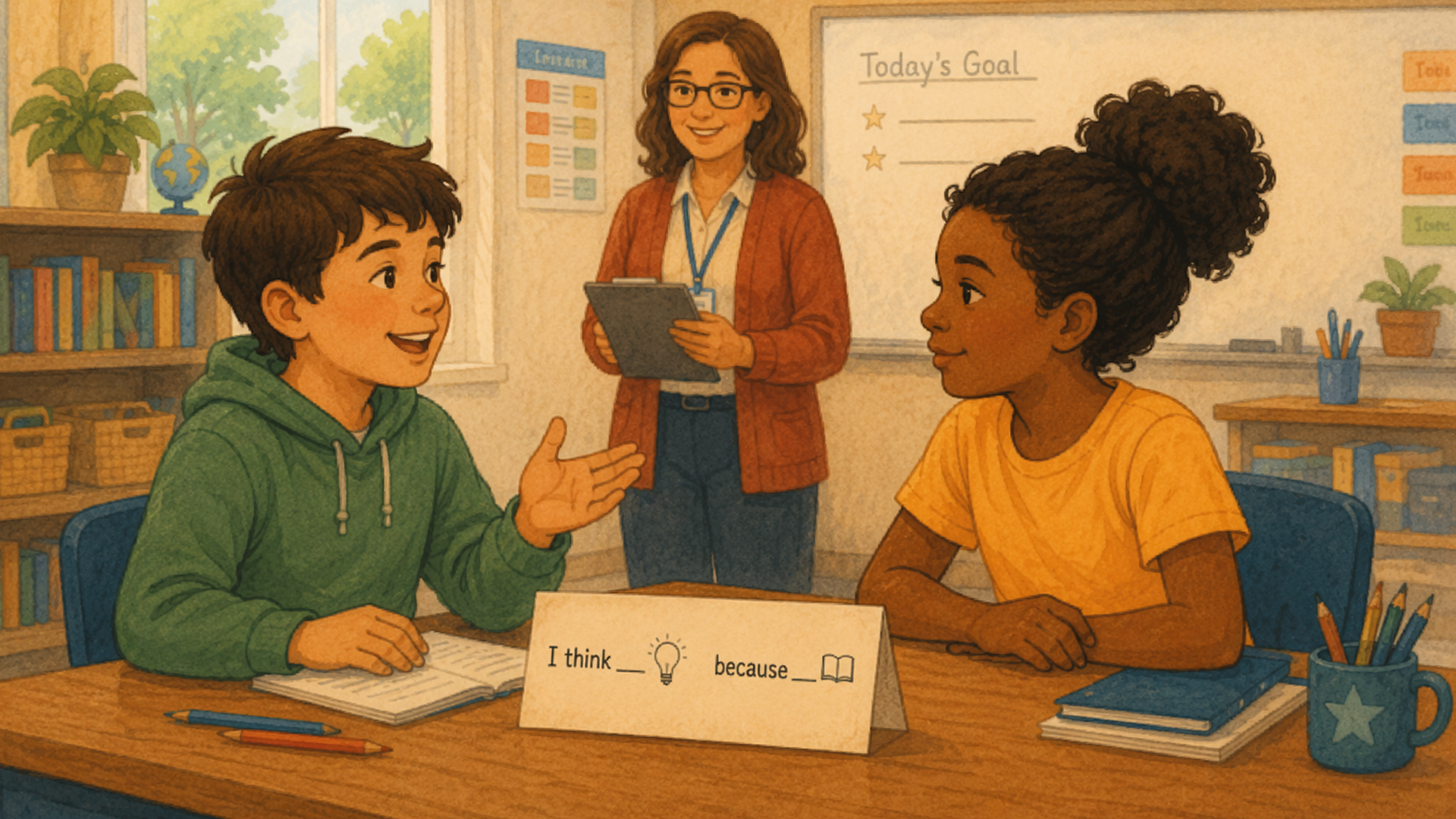
You can also check out our Think-Pair-Share planner to plan and delve into the different ways teachers can enhance critical thinking, learning, and engagement in their multilingual classrooms.
When thoughtfully chosen and implemented, digital resources can open up new possibilities for language development and academic achievement.
And always remember that the goal is not to use more tools, but to use a few tools really well in service of multilingual learners’ voices, identities, and success.