I recently had the pleasure of joining Ronald Hay on The Teacher Hotline podcast to discuss a topic I’m deeply passionate about: challenges multilingual learners face and how to support them.
The conversation was sparked by a question from Luke, an elementary teacher in Mississauga dealing with the challenges of teaching international students.
I wanted to share some key insights from our discussion that might help other educators facing similar challenges.
Contents
My Personal Journey Identifying Challenges in Multilingual Classrooms
My path to education began in college through my love of mathematics.
While pursuing higher-level math, I encountered my own learning challenges, which gave me empathy for students facing similar struggles. This experience led me to pursue my teaching credential and master’s in secondary math education.
My first teaching position was in the San Fernando Valley area of Los Angeles, where I taught geometry to predominantly Latino students from Spanish-speaking households.
This experience forced me to think deeply about how to help students develop academic language proficiency alongside content mastery.
4 Common Challenges Multilingual Learners Face
When teaching high school geometry, I observed that math content is challenging even for native English speakers.
For bilingual learners, there are additional layers of complexity:
- Navigating new vocabulary
- Learning language functions and structures
- Understanding how to describe mathematical concepts
- Mastering new ways of collaborating with peers
Their brains are essentially working overtime, processing both content and language simultaneously. It’s crucial for teachers to recognize these challenges multilingual learners face and provide appropriate scaffolding and support.
#1 Integrating Language and Content Learning
Students and educations often struggle to integrate language development with grade-level content, and even wonder if they should be taught separately?
The most effective approach is actually to provide both integrated and designated language development opportunities.
In California, we use what’s called “designated ELD” (English Language Development) – protected time where students focus specifically on language skills. This might range from basic peer interaction for newcomers to more sophisticated academic language use as they progress.
But we can’t rely solely on designated language development. Our brains actually learn language more effectively when it’s tied to meaningful context.
Rather than memorizing vocabulary in isolation, students learn better when they’re using language for authentic purposes – like describing polygons in geometry class or discussing scientific processes.
For content teachers, this means thinking strategically about incorporating all four language domains: reading, writing, speaking, and listening.
We need to provide appropriate scaffolds such as:
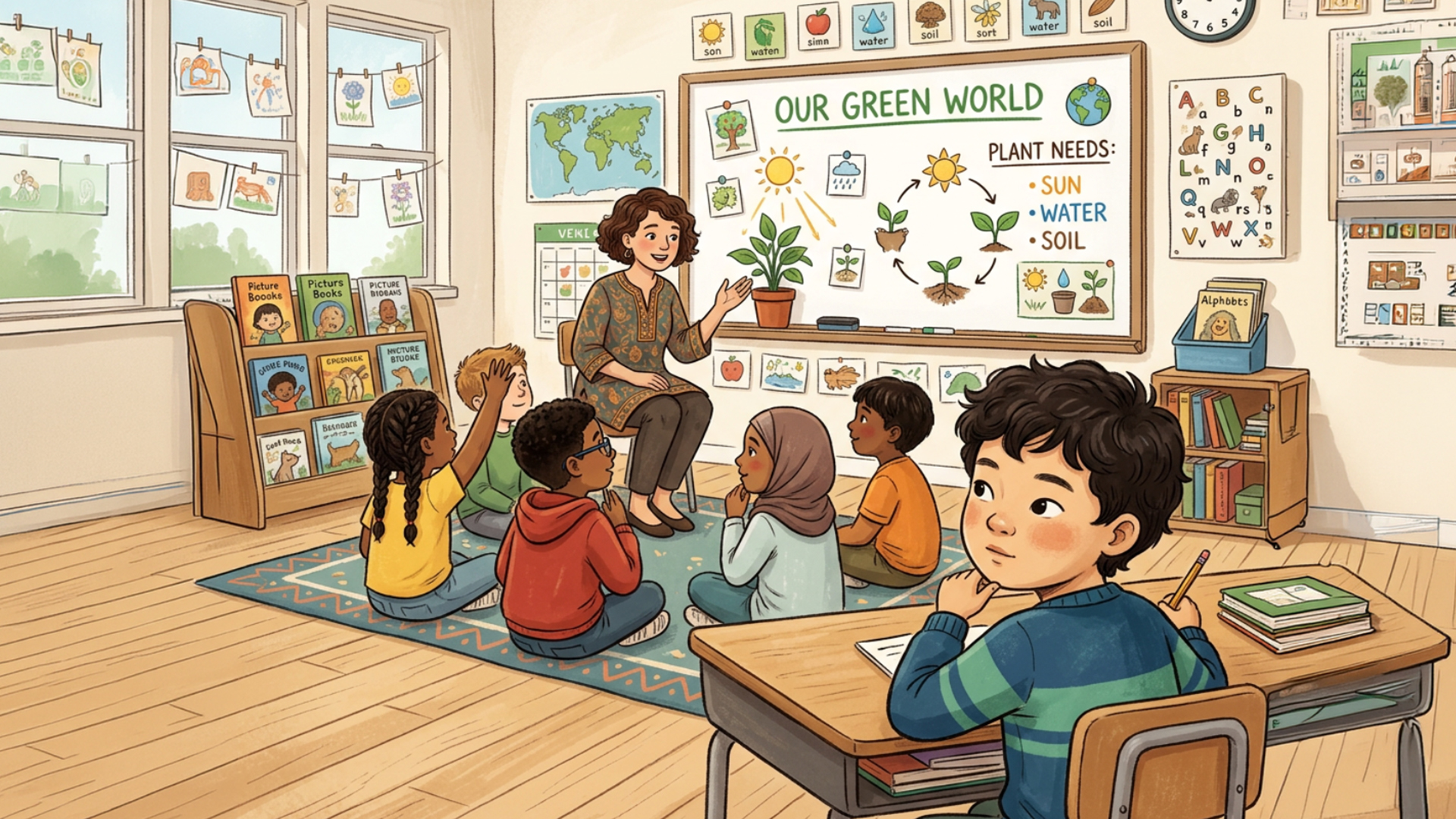
- Visual aids for vocabulary building
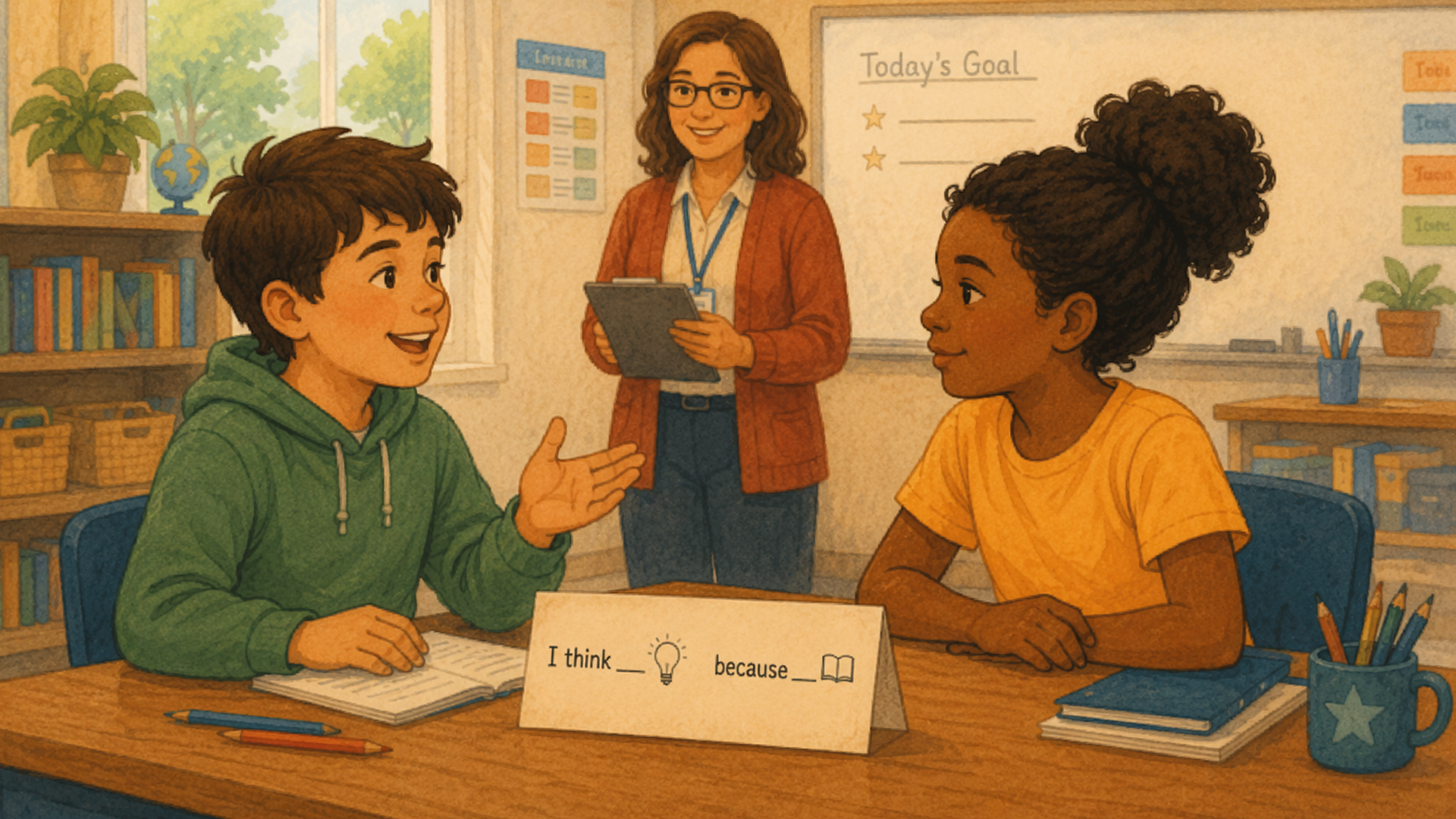
- Sentence starters for speaking and writing
- Word walls
- Visual dictionaries
#2 Navigating Different Proficiency Levels
Teachers attending multilingual classrooms often need to scaffold and balance lessons for students at different English proficiency levels.
This is increasingly relevant as we see more global migration and international students entering our classrooms at various language stages.
Here are some effective strategies I’ve found:
Small Group Instruction
Don’t limit this to primary grades – it’s valuable at all levels. Create opportunities for targeted support through rotating stations or centers.
Transparent Scaffolding
Be open with students about their language data and proficiency levels. I’ve seen successful classrooms where teachers use color-coded scaffolds:
- Blue scaffolds for more advanced learners
- Green scaffolds for developing language learners
This approach:
- Allows students to own their learning journey
- Creates an inclusive environment
- Celebrates progress as students advance to different scaffold levels
- Helps students understand that we all need different supports at different times
The key is building a classroom culture where varying levels of support are normalized and celebrated as part of the learning process.
#3 Family Engagement and Language Barriers
Families, schools, and the relationship between them is also key for students to successfully develop a second language. But how is it possible when families have limited proficiency?
This is crucial to address because students spend most of their time outside of school.
Here’s what I emphasize to families:
All Language Development is Valuable
- Reading to children in any language supports literacy
- Engaging in rich conversations in the home language builds cognitive skills
- Strong primary language skills transfer to second language acquisition
Combat Language Shame
I often had Spanish-speaking parents apologize for their limited English.
I would respond by highlighting their bilingual advantage and apologizing for my own limited Spanish proficiency. We need to shift the narrative from language deficit to language asset.
Leverage Technology Tools
- Introduce families to translation apps and tools
- Show parents how to access bilingual features in educational software
- Provide guidance on using tech tools to bridge language gaps
Ensure School Communication
- Provide materials in multiple languages
- Make translation services available
- Create welcoming spaces for all families regardless of language background
The goal is to empower families to support their children’s education in whatever language they’re most comfortable using, while providing the tools and resources they need to stay engaged in the school community.
#4 Limited Assessment and Feedback for Multilingual Learners
Multilingual learners have to navigate and adapt to assessment and evaluation processes that, most of the time, reflect their English expression more than their true knowledge.
In my opinion, this is one of the most nuanced challenges educators face.
Here’s my approach to making assessment both fair and effective:
Decoupling Content and Language Start by separating two key elements:
- Content mastery – What do you want students to know and be able to do?
- Language proficiency – What level of academic English do you expect them to demonstrate?
When we clearly distinguish between these elements in our assessment criteria, it becomes easier to:
- Provide targeted feedback
- Help students self-assess
- Give fair grades that reflect true understanding
- Address language development specifically
What Can Educators Do to Support Multilingual Learners?
Creating Clear Assessment Frameworks
I recommend:
- Developing dual-goal rubrics that separate content and language objectives
- Communicating expectations clearly to students
- Allowing students to demonstrate content knowledge in multiple ways
- Providing specific feedback on both content and language separately
Using Technology and AI Tools
While we’re still exploring AI’s full potential, here are some promising applications:
For Teachers:
- Rewriting text at different complexity levels
- Generating examples of effective teaching strategies
- Creating scaffolded materials
For Students:
- Using AI for text summarization
- Creating personalized language supports
- Developing self-help scaffolds
One exciting development I’ve seen is Teach FX, which uses AI to analyze classroom discourse and provide teachers with data about student speaking time and engagement.
Final Advice for Educators
The foundation of effective multilingual education is building a strong classroom culture.
Before implementing any strategies or tools:
Create an Environment of Acceptance
- Celebrate linguistic diversity
- Value students’ cultural backgrounds
- Build strong relationships
Adopt a “Warm Demander” Approach
- Show warmth and support while maintaining high expectations
- Communicate belief in students’ abilities
- Nurture strengths and talents
Focus on Student Voice
- Create structured opportunities for student talk
- Provide scaffolded support for academic conversations
- Allow students to practice language in low-stakes settings
Remember the Bigger Picture
The goal isn’t just language acquisition – it’s empowering students to become confident, capable learners who can fully participate in their education and future careers.
Resources for Further Learning
For educators wanting to dive deeper, I recommend:
- Jeff Zwiers’ work on academic conversations and language routines
- Zaretta Hammond’s research on culturally responsive teaching
- The National Association for Bilingual Education (NABE) conferences
- Visit ensemble learning.org for free resources and consultation
Remember, teaching multilingual learners is about creating inclusive spaces where all students can thrive.
Avoid the mistake of only focusing on language instruction.
When we focus first on building strong relationships and maintaining high expectations, the strategies and tools we implement become much more effective.