Picture two classrooms.
In one, all students are given the same lesson, the same materials, and the same expectations.
When it’s time to explain their thinking, a few hands go up, while others stay quiet. Many probably understand—but because the language of the task gets in the way of showing what they know, they choose silence.
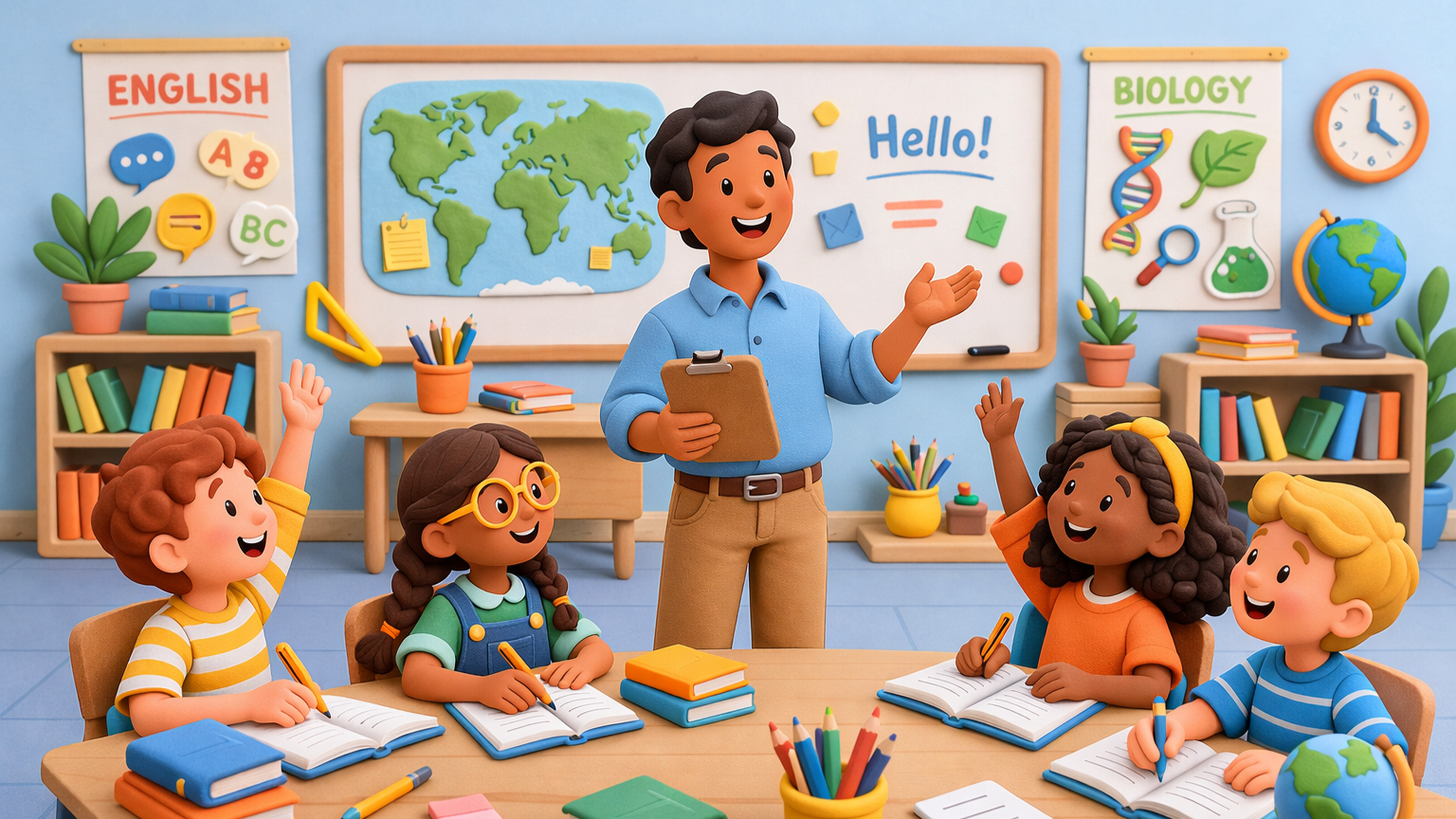
In the classroom next door, the lesson is just as rigorous, but students have access points.
There are visuals on the board, sentence frames to support explanations, and structured opportunities to talk through ideas before writing. More students participate, and their thinking becomes visible at the same time that their language is expanding.
These two classrooms often exist in the same school, but feel like they belong in different periods of time. And the truth is that most educators have seen both of these rooms in the same hallway, sometimes even taught in both at different points in their careers.
The difference reflects a broader shift in the field, from older approaches that expected students to adapt to instruction to modern approaches that adapt instruction to students.
As you read, you might think about which classroom feels most familiar to your current practice, and where you have already started making that shift.
Across the U.S., multilingual learners make up more than 10% of the K–12 population, and in many districts, that number continues to grow.
In states like California and Texas, one in five students is classified as an English learner.
These students are doing something quite complex every day: learning grade-level content while developing proficiency in a new language.
Modern bilingual education is built around that reality.
It focuses on designing learning environments where students can engage, participate, and demonstrate understanding as they develop language, instead of after.
Contents
- 1 What Has Changed in Bilingual Education?
- 2 Modern Bilingual Education Models and Strategies (and What Schools Are Using Today)
- 3 What Instruction Looks Like in Modern Bilingual Classrooms
- 4 How Modern Bilingual Education Changes the Game for Everyone Involved
- 5 What Schools Get Wrong About Bilingual Education Today
- 6 6 Key Aspects for Implementing Modern Bilingual Education
- 7 Evolving from Programs to Systems
What Has Changed in Bilingual Education?
Over the past two decades, bilingual education has shifted in both mindset and design.
Please keep in mind that if you were trained before some of these changes, or in a context with few multilingual learners, it is normal if parts of this feel new.
Earlier approaches often positioned multilingual learners as needing to “catch up” in English before fully engaging in academic work. Today, the focus has moved toward ensuring students can access rigorous content while their language develops.
This shift shows up in how schools think about language, instruction, home-classroom relationships, and responsibility.
More schools now recognize that students bring valuable linguistic and cultural knowledge into the classroom.
At the same time, responsibility for language development has expanded beyond specialists. Content teachers are expected to integrate language into their science or history instruction, for example, making it part of everyday learning.
- For teachers, this means small but steady shifts in planning and talk moves.
- For principals and instructional teams, it means making sure those expectations are realistic, supported, and not just added on top of everything else.
This evolution also changes what success looks like.
Schools are not only aiming for English proficiency, but for biliteracy, academic achievement, and long-term opportunity.
Just as importantly, outcomes are shaped less by the model itself and more by how well it is implemented. For this, vision, staffing, curriculum, and instructional practices all need to work together.
Modern Bilingual Education Models and Strategies (and What Schools Are Using Today)
Schools implement different models depending on their context, population, and goals.
Here’s a quick comparison chart between some of the most common models and strategies.
Keep in mind that these can be mixed and adapted according to district, school, and classroom needs.
|
Model |
Goal | Strength |
Best Fit |
| Dual Language Immersion (DLI) | Bilingualism, biliteracy, achievement | Strong literacy outcomes | Long-term programs |
| Early Biliteracy Models (SEAL-like) | Build academic language early | Prevents remediation later | PreK–4 systems |
| Transitional Bilingual Education | Transition to English | Early access support | Growing EL populations |
| Newcomer Programs | Acceleration + adjustment | Strong entry support | Recent arrivals |
| Bilingual Educator Pipeline Strategies | Sustain program quality | Enables long-term success | District/state level |
If you are a classroom teacher, you do not need to master every model. It is more important to understand which approach your school is using and what that means for your day-to-day instruction and language expectations.
Dual Language Immersion (DLI)
Dual-language immersion stands out as one of the most research-backed approaches.
According to the Institute of Education Sciences, this approach consists of providing sustained academic instruction in two languages over multiple years, typically beginning in elementary school, using either two-way (mixed language groups) or one-way designs.
For example, city initiatives in places like Portland, Oregon have shown how consistent program design, aligned curriculum, and long-term commitment can scale dual language programs across districts.
In this case, this system prioritizes both language development and academic rigor from the earliest grades, but also offers a 90:10 and a 50:50 model for the school to adapt depending on their community.
There is also Utah’s statewide DLI scale-up, which improved math and ELA performance, as well as increased EL reclassification rates.
Research shows that students in well-implemented DLI programs can outperform peers in English reading by approximately 7 or 9 months by middle school, while maintaining performance in math and science.
- For teachers, this means planning with both languages in mind and leaning on shared routines.
- For school leaders, it means protecting time for collaboration and resisting pressure to abandon the model too early when early scores fluctuate.
Early Biliteracy and Whole-School Models
In many districts, bilingual education begins before formal programs like DLI.
In California, initiatives such as SEAL (Sobrato Early Academic Language) demonstrate how integrating language development into early literacy instruction can significantly strengthen outcomes for multilingual learners.
This consisted in a four-year, multi-district evaluation across 67 schools in 12 districts, and included focus on oral language, vocabulary, and content integration from PreK through third grade.
It reported statistically significant increases in teachers’ use of research-based practices and found SEAL English learners in grades 2–4 performed comparably or better than statewide EL peers in English proficiency development.
These approaches integrate vocabulary development, structured talk, and content learning from PreK through the primary grades. The goal is to prevent gaps from emerging rather than addressing them later.
Newcomer Programs
For schools serving recently arrived students, newcomer programs can play an important role within a modern bilingual education system.
These programs are typically short-term pathways, often lasting up to one year, designed to help students adjust to U.S. schooling while building foundational literacy, content knowledge, and English development.
Strong newcomer models combine academic acceleration with social-emotional support, family engagement, and bilingual access points that help students participate in school more confidently from the start.
- If you teach newcomers, you have likely seen how trust, clear routines, and small language wins can matter as much as the curriculum.
- For leaders, your support often shows up in class size, staffing, and thoughtful course schedules.
In practice, this can include content-based ESL, double blocks for language and literacy, home-language supports, and clear transition plans into longer-term program models.
Transitional Bilingual Education
Transitional bilingual education remains one of the recognized bilingual program types in U.S. public education, even though current conversations often focus more heavily on dual language immersion.
In this model, students receive instruction in their home language alongside English during the early stages of schooling, with the goal of helping them access academic content while building enough English proficiency to transition into English-medium instruction over time.
In today’s context, transitional bilingual education is often most relevant in districts experiencing growth in multilingual learner populations and needing an approach that provides early access and support, especially when long-term dual language models are not yet fully in place.
However, as educators, we must keep in mind that modern bilingual education is increasingly oriented toward long-term outcomes like biliteracy, academic achievement, and sustained language development, rather than rapid language replacement alone.
Bilingual Educator Pipeline Strategies
Strong bilingual programs depend on strong staffing.
Districts across the country are addressing this through “grow-your-own” models, where paraprofessionals and community members are supported to become credentialed bilingual teachers.
Partnerships with local universities have proven especially effective in creating sustainable pipelines. Many systems are investing in “grow-your-own” programs, residencies, and alternative certification pathways to develop bilingual educators.
Without this foundation, even well-designed models struggle to scale or sustain over time.
What Instruction Looks Like in Modern Bilingual Classrooms
Programs set the structure, but instruction determines whether students can actually access learning.
Integrated Language and Content Instruction
In strong classrooms, language development is woven into every subject.
Teachers plan what students will learn, and also how they will use language to show that learning.
For example, a math lesson might include opportunities for students to explain reasoning using sentence starters, while a science lesson may explicitly model how to compare evidence.
This approach ensures students are practicing academic language in context, and not in isolation.
Translanguaging
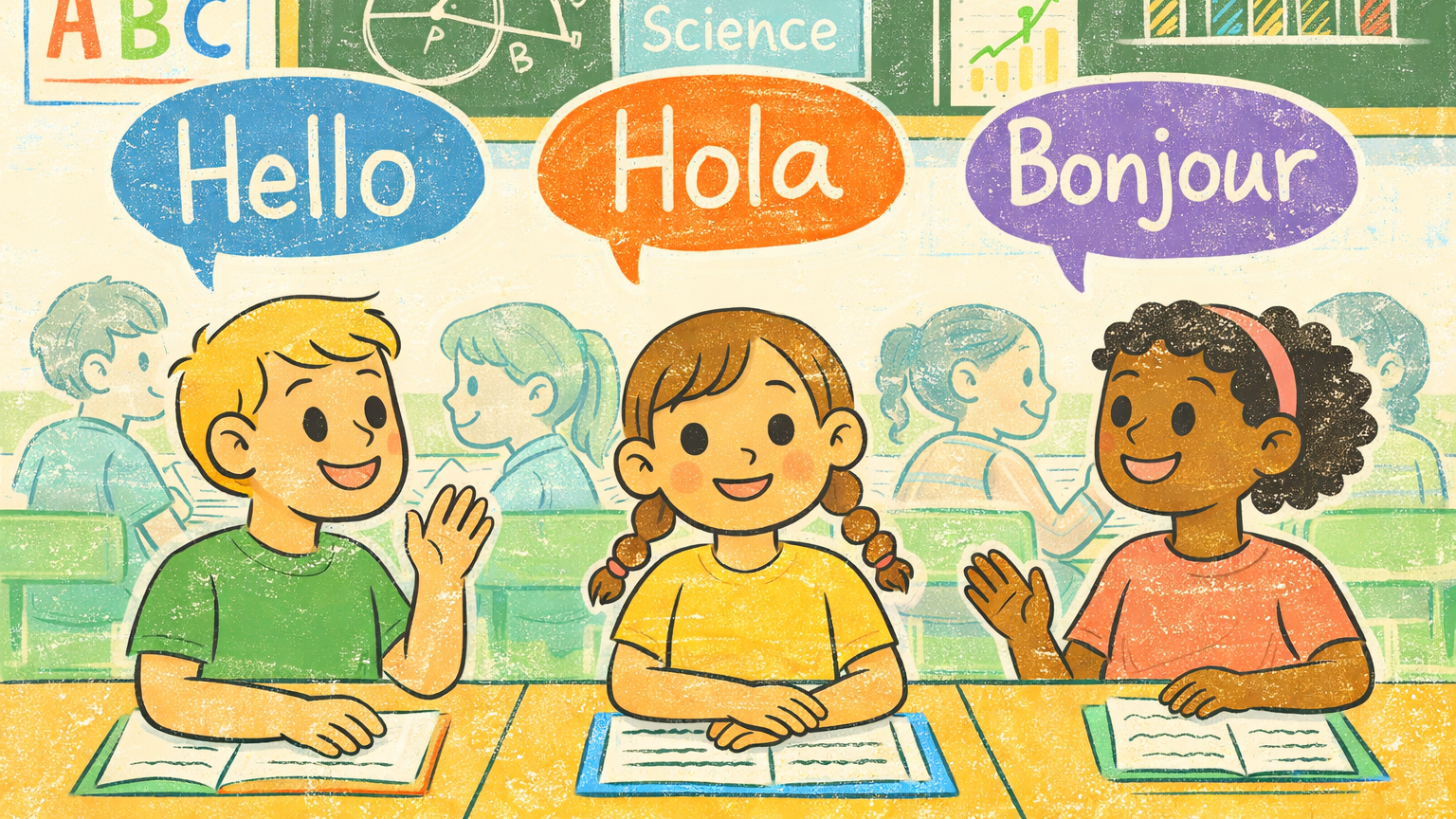
Students are encouraged to draw on all the language resources they have available.
If translanguaging is new to you, you might start small.
Allow students to jot ideas in their home language before sharing in English, or to quickly confer in a shared language before answering a question.
In classrooms implementing translanguaging effectively, students might analyze a text in one language and discuss it in another, or collaborate bilingually before presenting in English.
These practices have been documented in classrooms where participation increased because students had more ways to engage with content.
This can look like planning ideas in a home language before sharing in English, discussing concepts with peers bilingually, or using multilingual resources to deepen understanding.
These practices help students connect prior knowledge to new learning and reduce the cognitive load of working in a single language.
Scaffolding Without Simplifying
Access naturally comes from how instruction is designed.
Teachers use supports like visuals, models, sentence frames, and structured discussion routines to make thinking visible. These supports allow students to engage with grade-level content even when their English is still developing.
Over time, scaffolds are gradually removed as students build independence.
You might ask yourself: Which scaffold could my students do without now, and which one do they still genuinely need to access the task?
Relationships as a Foundation
Belonging plays a central role in participation.
When students feel recognized and valued, they are more likely to take risks, contribute ideas, and stay engaged.
This can come from small, consistent actions such as learning how to pronounce names correctly, incorporating students’ experiences into lessons, and creating predictable routines for participation.
How Modern Bilingual Education Changes the Game for Everyone Involved
When implemented well, bilingual education in the 21st century supports both academic and long-term outcomes.
Students in strong programs maintain or exceed grade-level performance over time while developing proficiency in more than one language.
They also show increased engagement when their identities and experiences are reflected in the classroom.
Over time, bilingual learners develop skills that extend beyond language, including adaptability, cultural awareness, and the ability to navigate multiple contexts.
What Schools Get Wrong About Bilingual Education Today
Even with strong models, challenges often emerge during implementation.
It is easy for schools to treat bilingual education as a standalone program without aligning instruction, staffing, or systems. Others separate language instruction from content, making it harder for students to apply what they learn.
Pull-out models can limit access to grade-level work, and support often fades too early, especially after students are reclassified.
Many of us have experienced well-intentioned supports that unintentionally pulled students away from rich instruction instead of into it.
Just know that naming that tension is the first step to solving it together.
In many cases, students disengage not because of the content itself, but because the conditions for participation are not fully in place.
6 Key Aspects for Implementing Modern Bilingual Education
Research consistently shows that strong outcomes come from coherent systems. The question for leaders is how to translate those conditions into daily practice.
The reality is that coherence is not only a district responsibility. That’s because teachers, coaches, and principals each see parts of the system that others cannot.
At Ensemble Learning, we’ve found 6 essential pillars:
#1 Clear Vision and Theory of Action
Start by defining what success looks like in your context.
For example:
- What does biliteracy look like by the end of elementary school?
- How will students demonstrate academic language across subjects?
A practical next step is to bring a leadership team together and map current practices against these goals. Where are they aligned and where are they not?
#2 Bilingual Staffing Pipelines
Staffing is often the biggest ‘physical’ constraint for these types of initiatives.
Districts can begin by identifying bilingual paraprofessionals or community members who may be interested in becoming teachers.
Partnerships with universities, residency programs, and tuition support can help build a long-term pipeline.
A simple starting point would be to create a list of current staff who are bilingual and explore how their roles could expand over time.
#3 Curriculum and Instruction Alignment
Once you have a clearer vision and logistic approach, you can take a recent unit plan and ask:
- Where are language objectives explicitly named?
- Where are students expected to speak, write, or explain?
- Is this lesson only doable by someone with full language proficiency?
Then, try adding one intentional scaffold, such as a sentence frame or structured discussion, to support certain moments and make it more accessible.
You do not need to fix every unit at once. Start with one high-leverage unit or grade level, learn from it, and build from there.
The idea is to make this across grades, subjects, and lessons, with time.
#4 Professional Development
PD is most effective when it is directly tied to real classroom practice.
Instead of one-time sessions, consider using coaching cycles or collaborative planning time where teachers bring lessons, test strategies, and reflect together.
A practical move: after a PD session, ask teachers to bring one upcoming lesson and identify where students may struggle with language.
#5 Family and Community Engagement
Families are key partners in bilingual education.
It all starts with communication. Are messages sent in home languages? Are there opportunities for families to share their perspectives and experiences, or is it only a one-way conversation?
One simple step is to review a recent communication before it gets sent and translate it into the top home languages represented in your school.
#6 Continuous Improvement Systems
Last but not least, in order to improve instruction, schools need visibility into what students are actually experiencing.
In some districts, leaders use student shadowing and focused walkthrough tools to observe how multilingual learners experience instruction throughout the day.
These practices reveal patterns that traditional data alone often miss, such as who is participating, who is not, and where language is creating barriers to access.
These evaluation tools can help teams notice patterns in participation, language use, and access to content.
A practical starting point: conduct a short walkthrough focused on student talk. Who is speaking? Who is not? What supports are present?
If you are in the classroom, you can try the same idea with a quick video of your own lesson or a peer observation, focusing only on who is talking and how.
From there, you and your team can see clearer paths for constant improvement.
Evolving from Programs to Systems
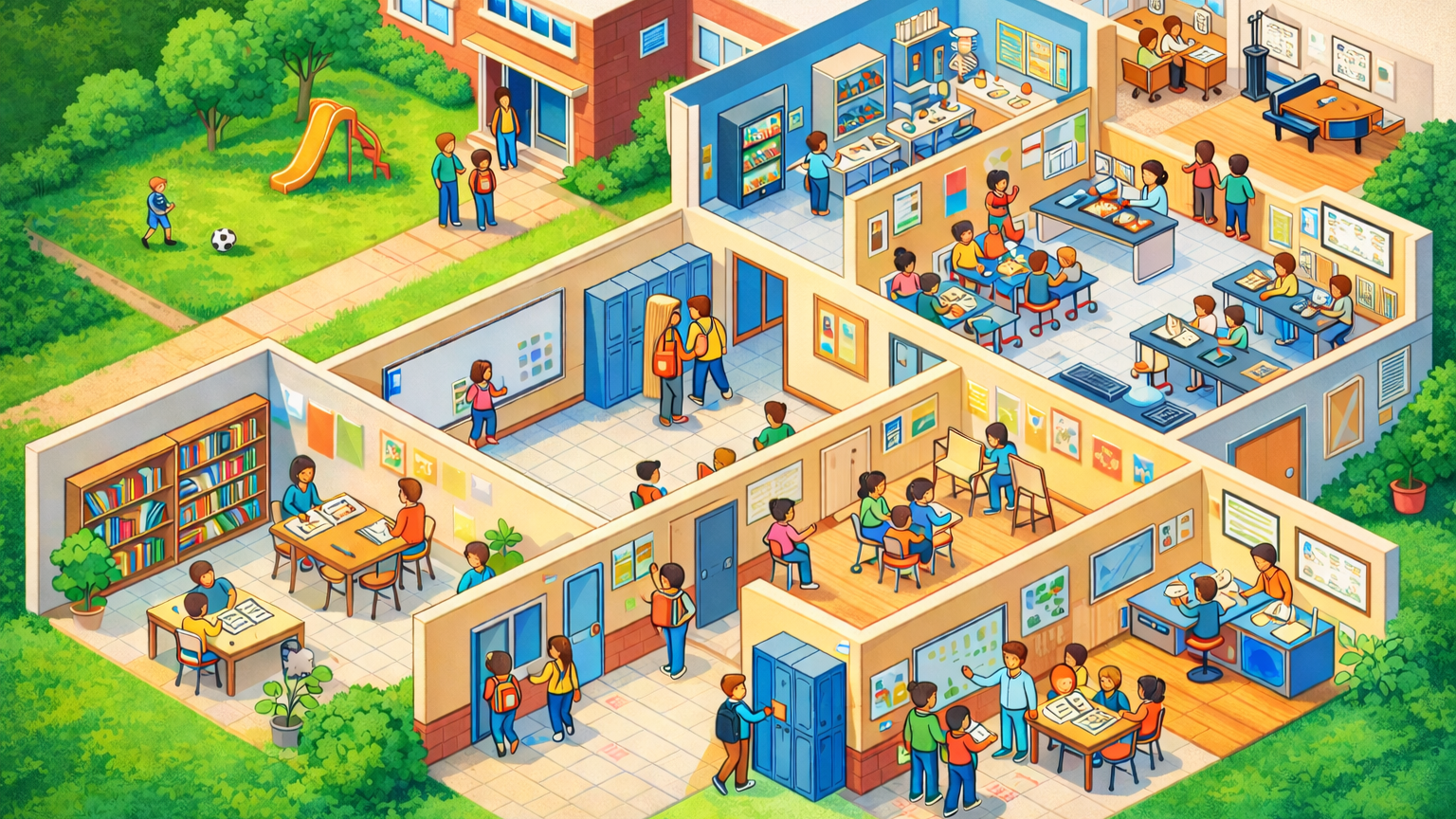
For many schools, the biggest shift is not adopting a new model, but rethinking how existing practices fit together.
Modern bilingual education asks schools to look closely at everyday instruction, routines, and decisions.
At your next meeting, ask your teachers: Where do students have access? Where do they hesitate?
Then, you can all reflect on where do systems unintentionally create barriers?
Leaders may begin by focusing on a few high-leverage moves:
- Identify one grade level or subject to pilot stronger language supports
- Observe classrooms with a focus on student participation
- Add one consistent routine for structured talk across classrooms
Over time, these small shifts begin to build more coherent systems.
Bilingual education in the 21st century is about making sure students can engage in learning as they are developing language, not after they have mastered it.
Take a moment to reflect, whether you teach, lead a school, or support from the district:
- Where are students held back by language, despite their ability to think?
- What is one change you could test in the next two weeks to improve access for multilingual learners in your role?”
At Ensemble Learning, we focus on understanding your school, your district, and your community, so the solutions are tailored to your needs and the shift to a student-centered system is easier.
We also know this work is happening alongside tight schedules, competing initiatives, and very real daily pressures.
That is why we focus on moves that fit into the work you already do, not on adding another program to your list.
Together, we can make a fairer present for our multilingual youth.
Every step forward is a step toward a more equitable and engaging school experience.