Annual report
2025
Table of Contents
Annual report
2025
Making Education Equitable For Multilingual Learners
Annual report
2025
Message From
Dear Friends and Supporters,
As we close out Fiscal Year 2025, we reflect with deep gratitude and renewed purpose. This year, Ensemble Learning took bold steps forward—expanding our reach, deepening our impact, and strengthening our organizational foundation. Our journey was guided by a shared belief: that multilingual learners deserve schools equipped to nurture their brilliance, language, and full identity.
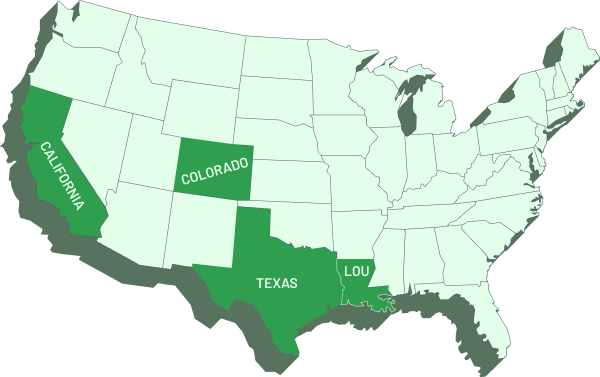
In partnership with educators, school systems, and communities, we grew to serve over 80 schools in FY2025 across California, Texas, Colorado, Louisiana, and— as we head into FY26 — expanding into Washington, D.C., and New Orleans. That growth reflects not just scale, but trust: schools returning year after year and new partners seeking to reimagine their support for multilingual learners (MLLs). Together, we impacted nearly 60,000 students and over 2,000 educators, demonstrating what’s possible when instructional equity is paired with cultural responsiveness and sustained implementation.
The results speak volumes. In Manor ISD, where we’ve worked across all elementary schools for several years, early evaluation findings show promising gains in reading and math outcomes for emergent bilingual students. These kinds of multi-year, deeply embedded partnerships are at the heart of our approach—underscoring the importance of “dosage,” consistency, and co-design in driving results.
Our impact extended beyond classrooms. We continue to support the design of a national bilingual teacher residency in partnership with the National Center for Teacher Residencies. We are expanding our work supporting dually identified students through our collaboration with the Oak Foundation.
And we continued to support the implementation of dual language programming across schools in Texas through our federal NPD grant focusing on the Texas Dual Language Project (TxDLP), reinforcing fidelity and building the instructional ecosystems these programs require to thrive and in reflection of what our educators, students, and families deserve when it comes to high quality education experiences.
We also strengthened our organizational sustainability. With over $2 million raised in philanthropic revenue and more than $3.5 million in multiyear commitments into 2026 and 2027, we more than doubled our fundraising target. With 100% board giving and new relationships forged with funders such as Stuart, Overdeck, and Emerson Collective, Ensemble is poised for continued growth in FY26 and beyond. While we fell slightly short of our $1.4 million earned revenue target meeting $1.1M, we offset that gap through project-based philanthropic partnerships and are evolving how we calculate and track this revenue to reflect our holistic funding approach.
Internally, we continued to invest in people and culture. This year’s staff retreat was a moment of reflection, renewal, and joy. We’ve navigated transitions with care—welcoming new team members, bidding farewell to others, and deepening our commitment to wellness and trauma-informed leadership supports.
This progress is grounded in our strategic plan, which continues to guide our work with clarity and ambition. And while we’ve achieved much, we know the work ahead is just as urgent. Across the country, schools are grappling with shifting policy landscapes, educator shortages, and persistent opportunity gaps for multilingual learners. Ensemble Learning is here to meet this moment—with the tools, team, and values needed to lead forward.
To our staff, school partners, funders, board, and community—thank you. You’ve helped make this a year of courage, collaboration, and progress. As always, we remain an ensemble: moving together, learning together, and striving together to ensure multilingual learners not only succeed, but thrive.
With gratitude and hope,
Dr. Daniel Velasco & Simmons Lettre
The Need
The Landscape
California and Texas together serve nearly 40% of the nation’s multilingual learners, with continued growth in metro areas such as Houston, Dallas–Fort Worth, Los Angeles, and the Bay Area. States like Colorado and Louisiana are seeing shifts in newcomer populations, and Washington, D.C. is growing with limited system-level infrastructure for dual-language or language-specific programming. Other states like Washington, Massachusetts, and Rhode Island have seen their MLL populations grow as well.
What School Systems Are Asking For
Systems across the country want to provide their educators with the proven skills, tools, and networks necessary to give MLLs the access to powerful educational ecosystems they need to learn and thrive. Over and over we hear about the need to give firm, but kind feedback to teachers in the moment and provide concrete examples for how to improve. Furthermore, as more schools and systems seek to add dual-language models across campuses; we’re often asked for clarity on redesignation, integrated ELD, and implementation of high quality instructional materials. Finally, we hear consistently that teachers need support for students classified as both EL and special education.
How We Respond
We partner as a systems builder — not a stand-alone PD —blending leadership and instructional coaching with data reviews so campuses can implement, monitor, and refine DLI/ELD with fidelity. We integrate research-backed, field-tested teaching and leadership strategies to better activate educators in service of all students and stand next to them through implementation in real-time.
Indicators We Track
Literacy and math achievement rates for multilingual learners
Progress toward English proficiency; and improvements across teacher and leader self-efficacy at mastering the strategies we promote
Counts of
long-term MLs;
Organizational Overview
Our Approach
We help schools build durable systems that make strong instruction routine.
Our work combines leadership coaching, instructional coaching, and professional learning tied to clear look-fors. We align language-allocation plans, strengthen student talk routines, and use walkthrough data to set campus-specific goals.
Leaders get practical tools and cycles they can sustain; teachers get concrete planning supports; systems get a common playbook so practices spread beyond one classroom or one year. This bridge from planning to daily instruction is how we support grade-level learning for multilingual learners, by making expectations visible, coaching them, and tracking progress together.
Mission
Vision
Our Why
Ensemble Learning, at scale and influence, fosters an environment where linguistic diversity is celebrated as a foundation of unity, understanding, and empowerment nationwide.
We are committed to advancing multilingualism, aspiring to create a global society where every individual can thrive and contribute, irrespective of their native language.
Values
Collaboration
Transformative Results
Access
Growth Orientation
Human Centered
Year In Review - Impact Metrics
57,543
Students
81
Schools Total
200,000+
Students
300+
Schools Total
Program Highlights
Leaders used our coaching to build campus systems for strategic separation of language and to strengthen oracy routines—moving these from isolated classrooms to schoolwide expectations.
At a district leadership retreat, an Instructional Coach described shifting from checklists to instructional strategy: ILT meetings centered on talk-moves, observations added oracy look-fors, PLCs and PD aligned; all DL teachers were retained and two stepped into mentor roles. Reclassification rates, MLL students, graduation rates, state testing (based on MLL status v non), attendance, teacher satisfaction and retention (correlation), etc.
PD Feedback & Case Evidence
Manor ISD case study: 96% of PD participants said objectives were met (the remaining 4% said “partially met”).
In schools supported by our team, emergent bilingual cohorts showed more year-over-year growth than peers at comparison schools.
Supported schools also saw a smaller decrease in attendance and a smaller increase in chronic absenteeism than comparison schools.
Note: This is a correlational analysis; other factors may contribute to outcomes. (Link the case study card labeled “Manor ISD 2025” to the full write-up).
Innovations Launched
National Center for Teacher Residencies
Launched a collaboration with the National Center for Teacher Residencies to design and pilot bilingual educator residency pathways in Texas and California, expanding the pre-service pipeline for multilingual learner-focused teachers. The initiative extends Ensemble Learning’s model into teacher preparation to increase readiness, certification, and retention of future bilingual educators at scale.
Urban District Literacy Collaborative
Initiated a multi-district literacy collaborative focused on evidence-based, language-rich instruction that strengthens Tier 1 practices for multilingual learners and all students. The collaborative integrates coaching, walkthroughs, and leadership support to align literacy implementation with district priorities and high-quality instructional materials.
AI Accelerator / AI tool development
Joined a national AI Accelerator backed by leading philanthropies to prototype tools that streamline program design and personalize professional learning, including an internal coaching assistant trained on Ensemble Learning’s research base. Early pilots target reduced development time, tighter alignment across sessions, and data-informed next steps based on observation and walkthrough inputs.
Selena’s work
Advanced “Selena,” an AI-enabled assistant that ingests Ensemble Learning’s professional learning content and research to recommend scope-and-sequence plans and next-step strategies for coaches and partners. Selena is being tested to enhance quality control, accelerate planning, and increase consistency of research-backed supports and policy integrations across regions.
Program Innovation Committee creation
Established a Program Innovation Committee of board and staff to vet emerging ideas, codify the Ensemble model, and accelerate R&D on offerings like dual language transitions, newcomer supports, and AI-enabled services. The committee creates quality gates, aligns innovations to market needs and policy, and guides pilots toward scalable, sustainable program pathways.
Key Focus Areas
01
Strategic Planning & Data Analysis
02
Transition to Dual Language
03
Instructional Coaching
04
Professional Development
05
Leadership Coaching
Strategic Planning & Data
Testimonials
“Their data triangulation and planning support helped align leadership, instruction, and accountability—we saw strategies translate directly into improved results for multilingual learners.”
– Principal, Large Texas District
What We Prioritized
Finalized the internal Ensemble Playbook for alignment (publishing by the end of August 2025); public-facing DLI materials slated for October 2025.
Ongoing scan of state policies impacting multilingual learners to keep services aligned to partner requirements.Expanded DLI beyond Texas by customizing service components for additional states.
New strand: Tier 1 classroom strategies for dually identified students that drive measurable academic progress.
With the Program Innovation Committee: exploring AI and other tools that improve instructional support, plus scoping teacher certification prep services.
How We Used Data To Steer
PD surveys: debriefed as a team to tighten session design and participant experience.
Instructional Walkthroughs: campus-specific focus areas informed coaching goals for leaders and teachers.
Student achievement data (when shared): validated existing site goals and flagged areas for added support.
Systems We Refined
Coaching logs to track hours, attendance, and focus areas—giving us a clear, capacity-aware schedule and transparent activity record.
Transitioning Schools to Dual-Language
Testimonials
“Since partnering with Ensemble, our bilingual teachers feel more confident, and our students are thriving. You can see it in the classrooms and in the data.”
– Principal, Manor ISD
Phase Of Support
Most sites were in implementation—teachers and leaders could clearly name growth areas and progress markers for their DLI rollout.
What Challenged Progress And How We Helped
Some leaders deprioritized DLI or delegated oversight, leading to uneven implementation. We addressed this with targeted coaching, surfacing positive trend data and facilitating collaborative problem-solving to reset expectations and routines.
Where We Worked
We provided coaching and/or professional learning tied to DL.
Wins Worth Noting
Consistent teacher and leader testimonials highlighting classroom shifts and confidence as DLI educators.
Walkthrough summaries show rising fidelity to DLI practices and steady educator growth across the year.
Instructional Coaching (PK–12)
Testimonials
“Teachers have expressed feeling more confident in ways to promote equity of voice in the classroom, and we observed stronger implementation of strategies after coaching.”
Longer-term Growth
Two teachers coached across two consecutive years became district DLI curriculum writers and recognized mentor/exemplar teachers for peer walkthroughs—after year-one work focused on building belief and aligning to the Texas Dual Language Framework.
Common Goals We Tackled
Language allocation plans: strengthening strategic separation of languages during instruction.
Oracy development: building purposeful student talk that leads to literacy and, in DLI, biliteracy.
What Growth Looked Like (short case)
A teacher shifted pair work from individual handouts to one shared handout per pair plus two colored pencils (one per student).
The simple change sparked accountable talk—students negotiated ideas, documented contributions in their color, and sustained richer discussions. The classroom tone moved from parallel work to true collaboration, with stronger oracy on display.
Professional Development (PK–12)
Testimonials
One of Ensemble Learning’s long-time partners, Aspire Junior Collegiate Academy, reported that their gap between emergent bilinguals and English-only students in iReady (a nationally-normed benchmark) was eliminated and their English learner reclassification rate doubled through their work with Ensemble. The principal, Celinda Guerrero said, “Since partnering up with Ensemble, educators have been able to build their multilingual toolkit. You hear and see students talking and engaging with one another. Teachers have expressed feeling more confident in ways to promote equity of voice in the classroom.”
What Partipants Told Us
Feedback was overwhelmingly positive and celebratory. We continue to refine facilitation to align to adult learning best practices and keep engagement high.
Most Requested Topics
DLI foundations (to strengthen
staff understanding and buy-in).
Oracy for multilingual learners (structures, prompts, and routines).
How We Tailored Sessions
We co-designed with each system, using kickoff conversations and walkthrough
data to set focus areas.
Leadership Coaching (PK–12)
Testimonials
“Ensemble has pushed our practices and ways of thinking while building leader capacity through coaching that’s grounded in trust and results.”
– Denver School Principal
Focus Areas
Campus systems that reinforce
language allocation.
Oracy expectations embedded in planning, walkthroughs, and PLCs
Leadership Coaching (PK–12)
Hays ISD principal: After a joint walkthrough and action-planning, the principal rolled out expectations for structured student conversations (with sentence stems and talk protocols).
On the follow-up visit, nearly every classroom featured purposeful, language-of-instruction conversations.
District leadership retreat: A PCE Instructional Coach shared that, after a year of DL and ILT coaching, DL was no longer seen as a niche program but as a school-wide anchor for strong instruction.
ILT meetings shifted from compliance talk to instructional strategy; walkthroughs adopted oracy look-fors; PLCs and PD aligned. The campus retained all DL teachers, two stepped into mentor roles, and the site became a model for peers.
Financial Overview
Accrual, FY24-25
$1,172,433
Earned Revenue
$3,261,674
Total Revenue FY25 (Cash)
$2,051,479
Estimated Philanthropic Contributions
$37,812
Estimated Individual Contributions
$4,516,662
Total Revenue FY25 (Accrual)
$2,030,420
Anticipated CY Roll Over for FY26
$2,486,242
Total Expenses FY25
$2.5M
Anticipated Cash + AR for FY26
171 Days of Projected Cash on Hand at EOY
Transparency Commitment
At Ensemble Learning, we are dedicated to maintaining the highest standards of financial transparency and accountability.
We have strengthened our financial resilience by adding multiple layers of financial oversight, allowing us to track and report funds accurately and responsibly. As stewards of the generous contributions of funders and community resources, we are committed to using every dollar efficiently to maximize our impact and fulfill our mission of providing multilingual learners and their school systems with the tools, skills, and networks necessary to create the kinds of educational ecosystems where our students can thrive.
Transparency Commitment
Clear Agreements
Law-Aligned Use
Secure Handling
Aggregated Learnings
Every engagement starts with a Data-Sharing MOU defining what data we use, how it’s protected, and how it’s shared.
We comply with federal and state privacy laws; data are used only to inform instruction and improve services—never beyond the agreement’s scope.
We safeguard student data and, at closeout, return or securely delete it per district direction; we do not retain PII beyond the term.
When sharing lessons learned, we use aggregated, anonymized data and never name schools or educators without explicit permission.
Supported by
Hays CISD / DSST / Aldine ISD / Manor ISD / Goose Creek ISD / PUC Community Charter ES / PUC Inspire Charter Academy / PUC Lakeview Charter Academy Navigator Schools / Environmental Charter Schools / Vaughn Next Century Learning Center / Denver Public Schools – Columbian ES / McAllen ISD / La Vega ISD Aspire Junior Collegiate Academy / Aspire Public Schools – Bay Area / City Language Immersion Charter / Granada Hills Charter HS / Granada Hills Charter TK-8/ Stride k12
Our Team
Dr. Daniel Velasco
President & CEO Ensemble Learning
Rick Rodriguez
Managing Director of Development and Strategic Partnerships
Davis Turner
Director of Growth
Leigh Mingle
Vice President of Research and Operations
Amanda Volz
Operations Manager
Kisha Attar
Administrative Manager
Julie Lara
Director of Multilingual Learner Services
Katherine Hamilton
Vice President
of Programs
Aracely Suarez
Multilingual Learner Instructional Coach
Eileen Salinas
Multilingual Learner Instructional Coach
Gerri Swift
Multilingual Learner Instructional Coach
Edgar Ibarra
Multilingual Learner Instructional Coach
Sarah Molfese
Multilingual Learner Instructional Coach
Simmons Lettre

Board Chair
Pablo Mejia
Vice Chair
Beth Hunkapiller
Treasurer
Vivek Khemka
Secretary
Hector Salazar
Board Member
Angelica Leveroni
Board Member
Connie Lafuente
Board Member
Dan Sanchez
Board Member
Leticia de la Vara
Board Member
18-19
19-20
20-21
Impact
Over 200k students served in 6 years
Total Schools Serverd Over Time
21-22
22-23
23-24
24-25
25-26
0
50
100
150
200
250
300
Looking Forward
Focus On
We’re doubling down on two moves: codifying what works so every partner gets consistent, high-quality support, and tailoring services to each system’s needs.
DCPS Secondary DLI Support
(Sullivan Family Foundation gift)
Internal Playbook
to anchor quality and consistency
Virtual Coaching Pilot
(evaluate impact; inform delivery/scale)
Dually Identified Learners Project
(field-informed guidance)
Program
Launch focused work on dually identified students; develop field-informed guidance, in collaboration with the Oak Foundation.
Finalize an internal Playbook to anchor quality and consistency, in collaboration with the Charter Schools Growth Fund (CSGF).
Support DCPS expansion of dual
language in secondary (Sullivan
Family Foundation gift).
Leveraging our internal AI tool – Selena, based off of our research and build from AI accelerator, provided/supported by Schusterman and Overdeck
Student outcomes: stronger academics and language growth, leveraging students’ full linguistic strengths.
Pilot virtual coaching with a sample
of teachers to assess impact.
Operations
Deepen use of Zoho (CRM)
and Asana (project management).
Add clearer staff accountability.
Emphasize implementation and
automation of existing processes.
Regions
We’re actively deepening our reach in core regions—Texas (Houston, San Antonio, Central TX), California (SoCal, Bay Area), Colorado (Denver/Aurora/Greeley-Evans), New Orleans, and DC—and evaluating new opportunities in Washington, Illinois, New York, New Mexico, and Florida based on emerging demand and population trends.
Sales & Growth
How we’ll grow
Expansion is driven by strategic, needs-based outreach: we prioritize contacts initiated through regional referrals, conferences, and directly tailored proposals that address district or campus priorities. This ensures each partner’s unique context and goals are the starting point for engagement and partnership-building.
Visibility
To build sector recognition, we lead presentations at major events (like our TDLP conference speaking engagements) and invest in targeted content campaigns, also including a special emphasis on supporting dually identified learners. These efforts expand our platform at the intersection of multilingual education and special populations, keeping our brand top of mind for stakeholders seeking practical solutions.
Development & Fundraising
Goals
Secure our budget, plus a million dollars in reserve, to continue building on our financial resilience.
Grants/Partners
Deepen current relationships
and cultivate new ones.
Engagement
impact storytelling (educator/student voices), region-specific narratives (e.g., Manor ISD, LA launches, upcoming D.C.), quarterly updates, a revamped annual report, small-group briefings, site visits, and board-hosted fireside chats.